
Tangential Flow Filtration (TFF) systems are among the most important tools in modern biopharmaceutical manufacturing, biologics production, vaccine development, cell therapy, and protein purification workflows. These systems are used to concentrate, purify, and exchange buffers for high-value biological products, making them a critical component in upstream and downstream processing.
For buyers searching for used TFF systems, ultrafiltration systems, diafiltration skids, or bioprocessing filtration equipment, understanding the capabilities and configurations of these systems is essential for selecting the right solution.
What Is Tangential Flow Filtration (TFF)?
Tangential Flow Filtration (TFF) is a filtration method in which fluid flows parallel to the membrane surface rather than directly into it. This design minimizes membrane fouling while allowing continuous separation and concentration of target molecules.
TFF is commonly used for:
- Protein concentration
- Monoclonal antibody processing
- Buffer exchange (diafiltration)
- Vaccine production
- Cell culture harvest processing
- Biologics manufacturing
Unlike traditional dead-end filtration, TFF systems support higher throughput and more efficient processing of sensitive biological materials.
In modern biopharmaceutical manufacturing, TFF has become a preferred technology because it can process large volumes while maintaining product quality and recovery rates. Whether concentrating antibodies after chromatography or performing buffer exchange before formulation, TFF systems help manufacturers achieve precise process targets while reducing product loss. Their scalability also makes them attractive for organizations moving from laboratory development to pilot and commercial production.
Ultrafiltration and Diafiltration Applications
One of the most common uses of TFF systems is ultrafiltration and diafiltration (UF/DF). During ultrafiltration, biological products such as proteins or antibodies are concentrated by removing excess water and smaller molecules. During diafiltration, buffers are exchanged to prepare the product for subsequent purification or formulation steps.
These processes are widely used throughout the biopharmaceutical industry because they help improve product quality while maintaining biological activity.
For laboratories and manufacturers, UF/DF systems provide a reliable way to reduce processing times while achieving precise concentration and formulation targets.
TFF Systems in Biopharmaceutical Manufacturing
Modern bioprocessing filtration systems play a critical role in downstream processing. After cell harvest and clarification, TFF systems are often used before chromatography, after chromatography, or during final formulation.
Typical applications include:
- Monoclonal antibody manufacturing
- Recombinant protein production
- Gene therapy development
- Cell therapy processing
- Vaccine manufacturing
- Plasma-derived therapeutics
As production volumes increase, scalable TFF platforms allow organizations to move from pilot-scale development to commercial manufacturing while maintaining process consistency.
TFF systems are particularly valuable because they integrate seamlessly into existing bioprocessing workflows, often serving as the bridge between upstream production and final purification. By concentrating product streams and performing efficient buffer exchanges, these systems help reduce processing times, improve chromatography performance, and prepare materials for final formulation. As demand for biologics and advanced therapeutics continues to grow, TFF technology remains a cornerstone of efficient and scalable manufacturing operations.
Key Components of a TFF Bioprocessing Skid
Most automated TFF skids include multiple integrated components that work together to maintain process control and product quality.
These often include:
- Feed and recycle tanks
- Filtration membranes and holders
- Pumps and flow control systems
- pH and conductivity monitoring
- Automated process controls
- Agitation and mixing systems
Advanced systems may also include data logging, recipe management, and automation features that help improve reproducibility and regulatory compliance.
Benefits of Automated TFF Systems
Compared to manual filtration processes, automated TFF systems offer significant advantages in both research and production environments.
Key benefits include:
- Improved process consistency
- Higher product recovery rates
- Reduced operator intervention
- Better scalability
- Faster buffer exchange and concentration
- Enhanced process monitoring
For buyers, automation can significantly reduce labor requirements while improving overall process efficiency.
What Buyers Should Look For
When evaluating used TFF systems for sale, buyers should focus on system configuration, capacity, and compatibility with existing workflows.
Important considerations include:
- Processing volume and tank capacity
- Membrane compatibility
- Automation level
- Sensor integration
- Pump and flow control performance
- Cleanability and maintenance requirements
Facilities producing biologics or antibodies often benefit from systems that can support multiple process scales and flexible operating parameters.
Recommended TFF and Bioprocessing Filtration Systems
Several manufacturers produce highly regarded TFF and ultrafiltration systems used throughout the biotechnology and pharmaceutical industries.
Pall Filtron 600L AUTOTFF Bioprocessing Skid
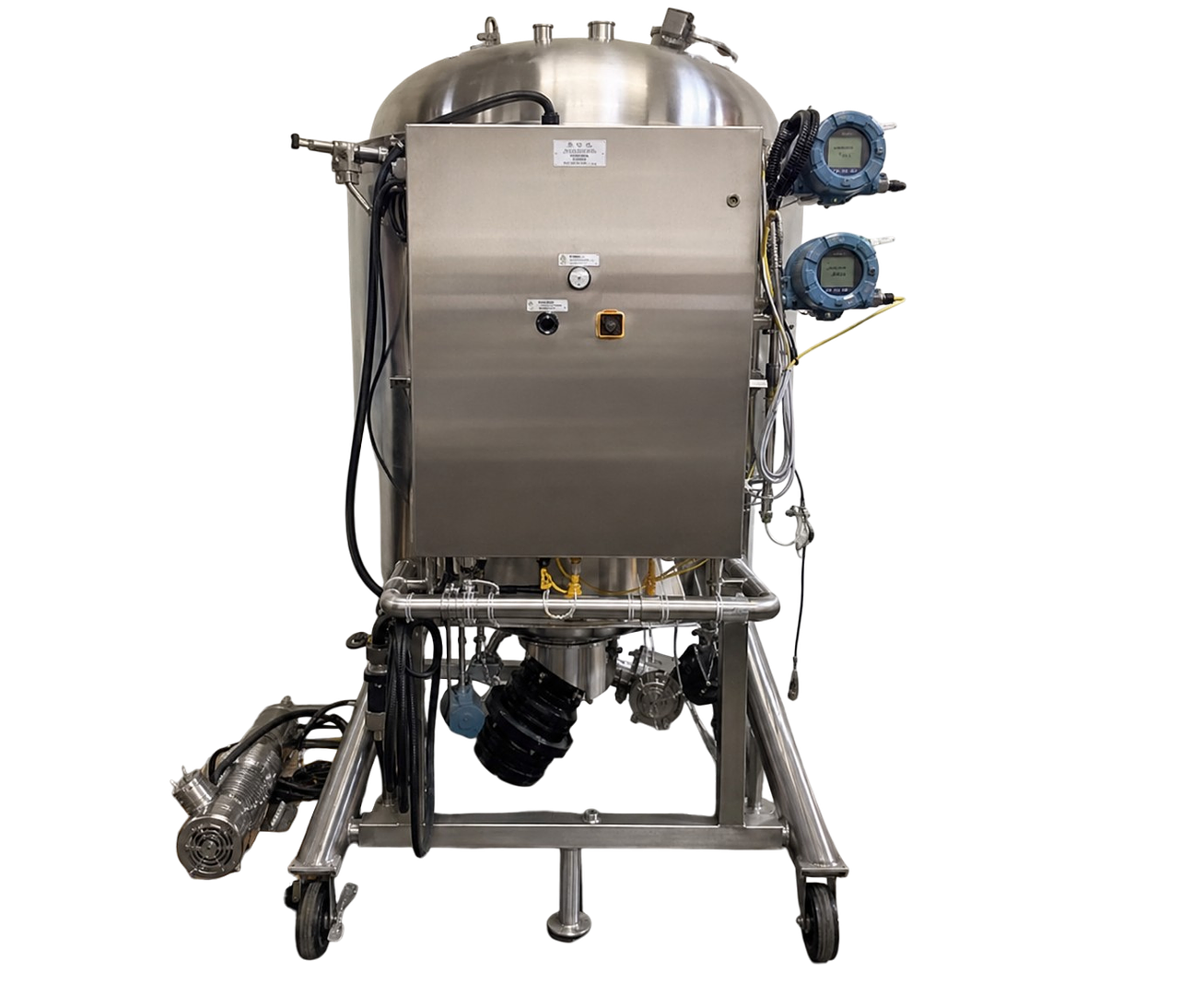
The Pall Filtron 600L AUTOTFF Bioprocessing Skid with Allegheny Bradford 316SS Recycle Tank, Lightnin Agitator, and Rosemount Analytical pH/ORP monitoring represents a complete large-scale ultrafiltration and diafiltration platform for bioprocessing applications.
This configuration combines automated filtration capabilities with integrated mixing and process monitoring, making it well suited for:
- Monoclonal antibody production
- Protein concentration
- Buffer exchange operations
- Biologics manufacturing
- Pilot and production-scale processing
The inclusion of a 600-liter recycle tank and automated controls helps support high-throughput operations while maintaining process consistency. For buyers seeking a complete TFF skid rather than individual components, this type of integrated system can provide substantial value and reduce installation complexity.
Other Popular TFF Systems
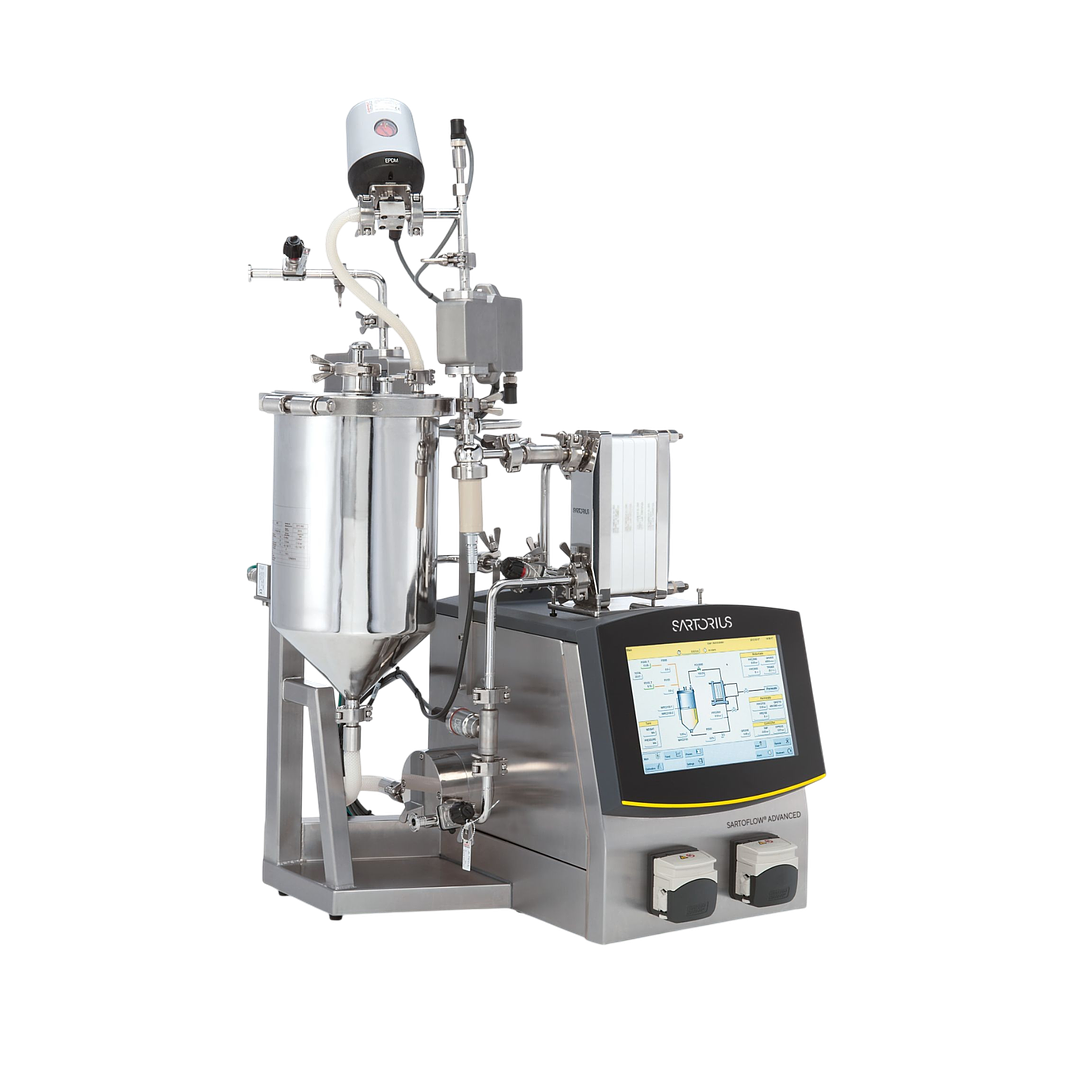
- Sartorius Sartoflow Advanced – widely used for ultrafiltration and diafiltration in biopharmaceutical manufacturing.
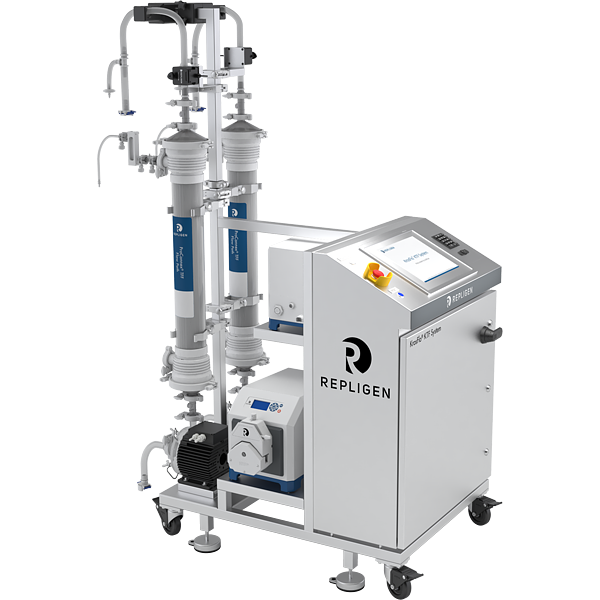
- Repligen KrosFlo KR2i – popular in research, process development, and pilot-scale applications.
- Repligen KrosFlo TFDF – designed for advanced biologics and cell therapy workflows.
- Cytiva ÄKTA Flux – combines filtration capabilities with scalable process control.
- Pall Cadence Inline Concentrator – commonly used for continuous bioprocessing applications.
These systems are frequently found in biotech startups, pharmaceutical facilities, contract manufacturing organizations (CMOs), and research institutions.
Why TFF Systems Are Essential for Modern Bioprocessing
As biologics, cell therapies, and advanced therapeutics continue to grow, tangential flow filtration systems have become indispensable for efficient downstream processing. Their ability to concentrate products, exchange buffers, and support scalable manufacturing makes them a core technology in modern biopharmaceutical production.
Organizations investing in quality TFF equipment benefit from:
- Improved process efficiency
- Higher product yields
- Reduced operating costs
- Greater scalability
- Better process control
Whether supporting laboratory development or commercial manufacturing, a properly configured TFF system can significantly improve productivity and product quality.
Looking for a TFF System or Bioprocessing Filtration Skid?
Browse available tangential flow filtration systems, ultrafiltration skids, diafiltration platforms, and bioprocessing equipment to find the right solution for your application. From pilot-scale development to production manufacturing, the right TFF system can help improve efficiency, consistency, and long-term operational value.
info@rebio.com