
As laboratories continue to increase sample throughput while maintaining strict quality standards, automated sample preparation systems have become essential equipment across molecular biology, genomics, proteomics, clinical diagnostics, pharmaceutical research, biotechnology, and life science laboratories. By automating repetitive sample preparation tasks, these systems improve reproducibility, reduce contamination risks, and free laboratory personnel to focus on higher-value analytical work.
For buyers seeking used automated sample preparation systems, laboratory automation equipment, DNA extraction systems, protein preparation platforms, or magnetic particle purification systems, investing in the right platform can significantly improve workflow efficiency while reducing operational costs.
What Is an Automated Sample Preparation System?
An automated sample preparation system performs laboratory processes such as nucleic acid extraction, protein purification, liquid handling, sample cleanup, and assay preparation with minimal operator intervention. These systems replace time-consuming manual procedures with standardized automated workflows that improve consistency from sample to sample.
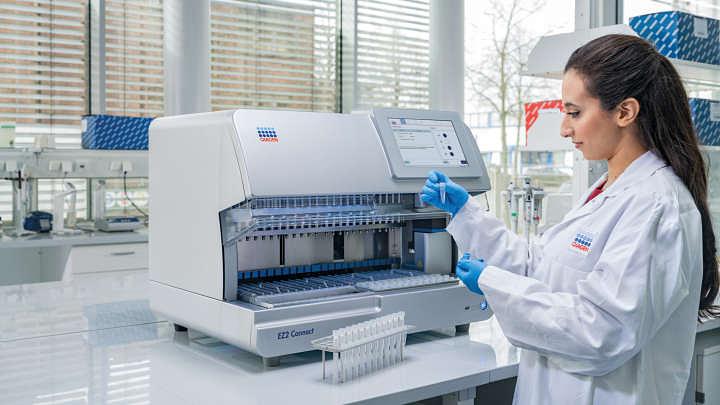
Modern sample preparation platforms integrate advanced robotics, magnetic bead technology, liquid handling, and software automation to streamline laboratory operations. Whether preparing samples for PCR, next-generation sequencing (NGS), mass spectrometry, or other analytical techniques, automated systems help laboratories achieve faster turnaround times and more reproducible results.
As laboratory workloads continue to grow, automation has become an essential investment for organizations looking to increase productivity without sacrificing accuracy. By reducing hands-on processing time and minimizing human error, automated sample preparation systems enable laboratories to process larger sample volumes while maintaining the consistency required for research, clinical diagnostics, and pharmaceutical development.
Why Laboratories Are Moving Toward Automation
As testing volumes continue to increase, manual sample preparation has become a major bottleneck for many laboratories. Automation helps eliminate repetitive manual tasks while reducing variability caused by operator technique.
Key advantages include:
- Higher sample throughput
- Improved reproducibility
- Reduced contamination risk
- Lower labor requirements
- Standardized workflows
- Better data consistency
- Increased laboratory productivity
For laboratories processing hundreds or thousands of samples each week, automation can dramatically improve efficiency while maintaining high-quality analytical results. Automated workflows also allow personnel to spend more time interpreting results, optimizing experiments, and supporting research objectives rather than performing repetitive preparation tasks. This shift improves overall laboratory productivity while helping organizations meet increasing testing demands.
Common Applications
Automated sample preparation systems support a wide variety of laboratory workflows across research, clinical, and industrial environments.
Common applications include:
- DNA extraction
- RNA purification
- Protein purification
- PCR and qPCR sample preparation
- Next-generation sequencing (NGS)
- Mass spectrometry sample preparation
- Clinical diagnostics
- Pathogen detection
- Drug discovery research
These platforms are frequently used in biotechnology companies, pharmaceutical manufacturers, hospitals, public health laboratories, academic institutions, and contract research organizations (CROs). Their flexibility allows laboratories to standardize workflows while adapting to changing research priorities and increasing sample volumes.
Technologies Used in Automated Sample Preparation
Different laboratories require different automation strategies depending on sample type and downstream analysis. Modern systems are available in several configurations, including magnetic particle purification platforms, robotic liquid handlers, automated protein digestion systems, and integrated sample preparation workstations.
Many instruments also include software-driven workflow management, barcode tracking, and connectivity with laboratory information management systems (LIMS). These features improve traceability, simplify documentation, and support regulatory compliance in research and clinical environments.
Advancements in laboratory automation have also made these systems more flexible than ever before. Many platforms support customizable protocols, multiple sample formats, and integration with PCR instruments, sequencing platforms, and analytical equipment. This flexibility allows laboratories to adapt workflows as research priorities change while maximizing the value of their automation investment.
What Buyers Should Consider
When purchasing a used automated sample preparation system, buyers should evaluate how well the instrument matches both current laboratory needs and future expansion plans.
Important considerations include:
- Sample throughput
- Supported sample types
- Automation capabilities
- Software compatibility
- LIMS integration
- Available protocols
- Consumable availability
- Service history
- Included accessories
It is also important to consider downstream applications. A laboratory focused on molecular diagnostics may prioritize nucleic acid purification, while proteomics laboratories may require automated protein digestion or advanced liquid handling capabilities. Selecting a flexible platform can maximize long-term return on investment and reduce the need for future equipment upgrades.
Recommended Automated Sample Preparation Systems
Below are some of the most widely used automated sample preparation systems found in molecular biology laboratories, pharmaceutical companies, biotechnology facilities, clinical laboratories, and research institutions.
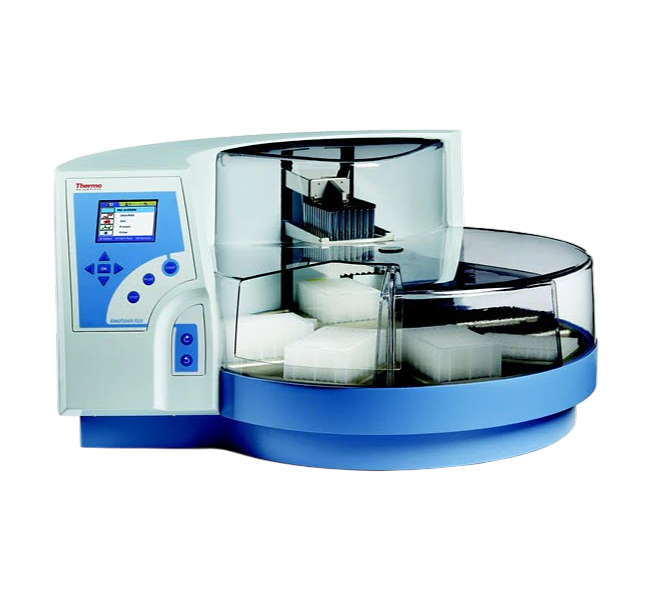
Thermo Scientific KingFisher – One of the industry's most popular automated magnetic bead purification systems, designed for high-throughput DNA, RNA, protein, and cell purification. Widely used for PCR preparation, genomics, molecular diagnostics, pathogen detection, and next-generation sequencing workflows.
QIAGEN QIAcube Connect – Automated nucleic acid purification platform supporting DNA, RNA, and protein extraction using validated QIAGEN protocols. Commonly used in molecular biology, clinical research, and academic laboratories.
Promega Maxwell RSC Instrument – Compact automated purification system for DNA, RNA, and protein extraction with prefilled reagent cartridges, making it ideal for clinical laboratories, forensic analysis, and biotechnology research.
Hamilton Microlab STAR – Highly configurable robotic liquid handling system capable of automating complex sample preparation, assay setup, and high-throughput screening workflows in pharmaceutical and life science laboratories.
Tecan Fluent Laboratory Automation Platform – Advanced liquid handling and laboratory automation system designed for genomics, drug discovery, cell biology, and high-throughput research applications requiring scalable workflow automation.
Why Automated Sample Preparation Systems Continue to Grow in Demand
Growing demand for molecular diagnostics, precision medicine, biologics, and genomic research has accelerated the adoption of laboratory automation worldwide. Organizations are seeking technologies that improve efficiency while maintaining consistent analytical quality.
Automated sample preparation systems reduce hands-on processing time, improve laboratory throughput, and generate highly reproducible results across a wide range of workflows. As research laboratories continue to expand and clinical testing volumes increase, automation remains one of the most effective ways to improve productivity without compromising data quality.
The continued growth of personalized medicine, infectious disease testing, and next-generation sequencing is also driving demand for scalable automation solutions. Laboratories need equipment capable of processing more samples in less time while maintaining strict quality standards. Automated sample preparation systems help meet these demands by supporting faster turnaround times, improved workflow consistency, and greater operational efficiency.
Investing in Laboratory Automation
Automated sample preparation systems have become foundational tools for modern life science research, pharmaceutical development, and clinical diagnostics. By improving consistency, minimizing contamination, and increasing laboratory throughput, these platforms help organizations accelerate research while reducing operational costs.
For laboratories looking to expand capacity or modernize existing workflows, purchasing a professionally maintained used automated sample preparation system provides access to advanced laboratory automation at a significantly lower cost than purchasing new equipment.
Whether supporting academic research, biotechnology startups, pharmaceutical manufacturing, or clinical testing laboratories, laboratory automation continues to deliver long-term value through improved productivity, standardized workflows, and reliable analytical performance. Investing in the right automated sample preparation platform today can help laboratories remain competitive while supporting future growth and evolving research demands.
Looking for Automated Sample Preparation Systems?
Explore our inventory of laboratory automation equipment, automated sample preparation systems, magnetic particle purification systems, and liquid handling platforms, or consign your surplus laboratory equipment to connect with qualified buyers worldwide.
info@rebio.com