
Modern semiconductor manufacturing depends on extremely stable process conditions, and precision temperature control is a critical part of maintaining repeatable wafer processing. From etch and deposition tools to lithography, metrology, vacuum systems, and other semiconductor equipment, industrial liquid chillers and temperature controller units help regulate heat loads and maintain consistent operating temperatures throughout production.
For semiconductor fabs, OEMs, equipment refurbishers, and buyers sourcing used semiconductor chillers, process temperature controllers, recirculating liquid chillers, or wafer fabrication cooling systems, selecting the correct unit is essential. Cooling capacity, temperature range, flow rate, pressure, fluid compatibility, communications, and tool compatibility can all affect whether a chiller integrates successfully with semiconductor process equipment.
Why Temperature Control Is Critical in Semiconductor Manufacturing
Semiconductor fabrication involves processes that are highly sensitive to temperature variation. Small changes in thermal conditions can influence process consistency, equipment stability, and wafer quality, especially as device geometries become smaller and manufacturing tolerances become tighter. 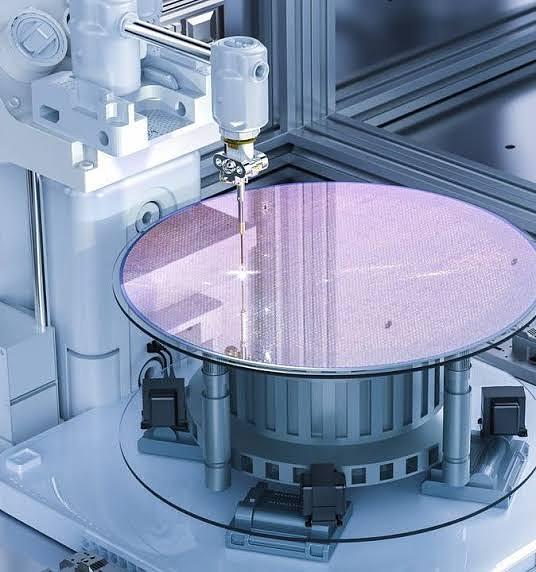
A semiconductor process chiller continuously circulates temperature-controlled fluid through a process tool or subsystem, removing or adding heat as required. This helps maintain stable conditions during demanding production cycles and reduces the risk of temperature-related performance changes.
Temperature control is also important for protecting high-value semiconductor manufacturing equipment. Stable cooling can help reduce thermal stress on chambers, RF components, lasers, pumps, electronics, and other critical subsystems while supporting continuous fab operation.
What Is a Semiconductor Process Chiller?
A semiconductor process chiller is an industrial temperature control system designed to provide precise liquid cooling to wafer fabrication and semiconductor processing equipment. These units typically circulate a heat-transfer fluid through the connected tool while actively controlling fluid temperature, flow, and pressure.
Unlike standard facility cooling equipment, semiconductor chillers are often designed for demanding process environments that require tighter temperature stability and more specialized operating ranges. Depending on the process, a unit may need to provide cooling well below ambient temperature, active heating, or rapid thermal response.
Many semiconductor temperature controllers are integrated directly with production tools and may communicate with the equipment through dedicated control interfaces. Because of this, buyers should consider the chiller as part of the process tool rather than as a generic standalone cooling unit.
Where Chillers Are Used in Wafer Fabrication
Semiconductor liquid chillers and temperature control systems are used throughout wafer fabrication facilities to support equipment that generates heat or requires carefully controlled process temperatures.
Common applications include:
- Plasma etching equipment
- Chemical vapor deposition systems
- Physical vapor deposition tools
- Lithography and exposure equipment
- Wafer inspection and metrology systems
- Ion implantation equipment
- Vacuum and pumping systems
- Laser-based semiconductor equipment
- Process chambers and electrostatic chucks
- Semiconductor test and development systems
The required chiller configuration can vary significantly between applications. An etch tool may require different temperature, flow, and pressure characteristics than a lithography or metrology system, making equipment compatibility one of the most important purchasing considerations.
Semiconductor Chillers for Etch and Deposition Processes
Etch and deposition are among the semiconductor processes where precise thermal management can be particularly important. Process chambers, electrodes, electrostatic chucks, RF components, and other subsystems may require dedicated temperature-controlled fluid circuits to maintain stable operating conditions.
In plasma etching, temperature can influence conditions at the wafer and within the processing chamber. Consistent thermal control helps semiconductor manufacturers maintain repeatable process performance from wafer to wafer and lot to lot.
Deposition equipment can also generate substantial thermal loads during operation. A properly matched industrial semiconductor chiller helps remove this heat while maintaining the temperature stability required by the connected process equipment.
Chillers for Lithography, Metrology, and Precision Equipment
Lithography and semiconductor metrology systems rely on extremely precise mechanical, optical, and environmental conditions. Temperature changes can contribute to dimensional variation, component expansion, or instability in sensitive optical and measurement systems.
Precision recirculating chillers can help stabilize lasers, optics, stages, electronics, and other temperature-sensitive components used in these systems. This is particularly important in advanced semiconductor manufacturing, where extremely small variations can affect measurement or process repeatability.
For buyers sourcing replacement chillers for lithography or metrology equipment, matching the original flow, pressure, temperature, and fluid requirements is especially important. Even a high-quality industrial chiller may not be suitable if its operating characteristics differ from those required by the semiconductor tool.
What Buyers Should Consider When Purchasing a Semiconductor Chiller
When purchasing a used semiconductor process chiller or temperature controller, compatibility with the original process tool should be the first priority.
Important considerations include:
- Operating temperature range
- Cooling capacity
- Temperature stability
- Fluid flow rate
- Pump pressure
- Heat-transfer fluid compatibility
- Heating capability
- Electrical voltage and phase
- Process connections and fittings
- Tool communication interface
Cooling capacity should be evaluated at the required operating temperature, not simply at nominal conditions. Chiller performance can change considerably at very low process temperatures, making it important to compare specifications under conditions similar to the intended application.
Buyers should also confirm what is included with the system. Hoses, fittings, filters, cables, pumps, communication modules, and remote-control hardware can be critical when integrating a used chiller with existing semiconductor manufacturing equipment.
Recommended Semiconductor Liquid Chillers & Temperature Control Systems
Below are several well-known semiconductor process chiller and precision temperature control platforms used in wafer fabrication, semiconductor equipment development, and advanced electronics manufacturing. 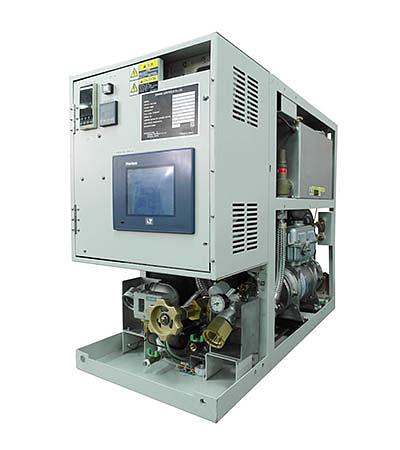
Shinwa Controls CH-7 Series – A precision semiconductor process chiller and temperature control platform designed for demanding wafer fabrication environments. Shinwa Controls specializes in thermal and flow-control technologies used with semiconductor manufacturing equipment, making the CH-7 Series a strong option for fabs, OEMs, and equipment integrators requiring stable process cooling.
Thermo Scientific ThermoFlex Series – Widely used recirculating chillers suited for laboratory, electronics, laser, and selected semiconductor equipment applications where dependable temperature-controlled liquid circulation is required.
PolyScience DuraChill Series – Industrial process chillers used for electronics manufacturing, test equipment, lasers, and other 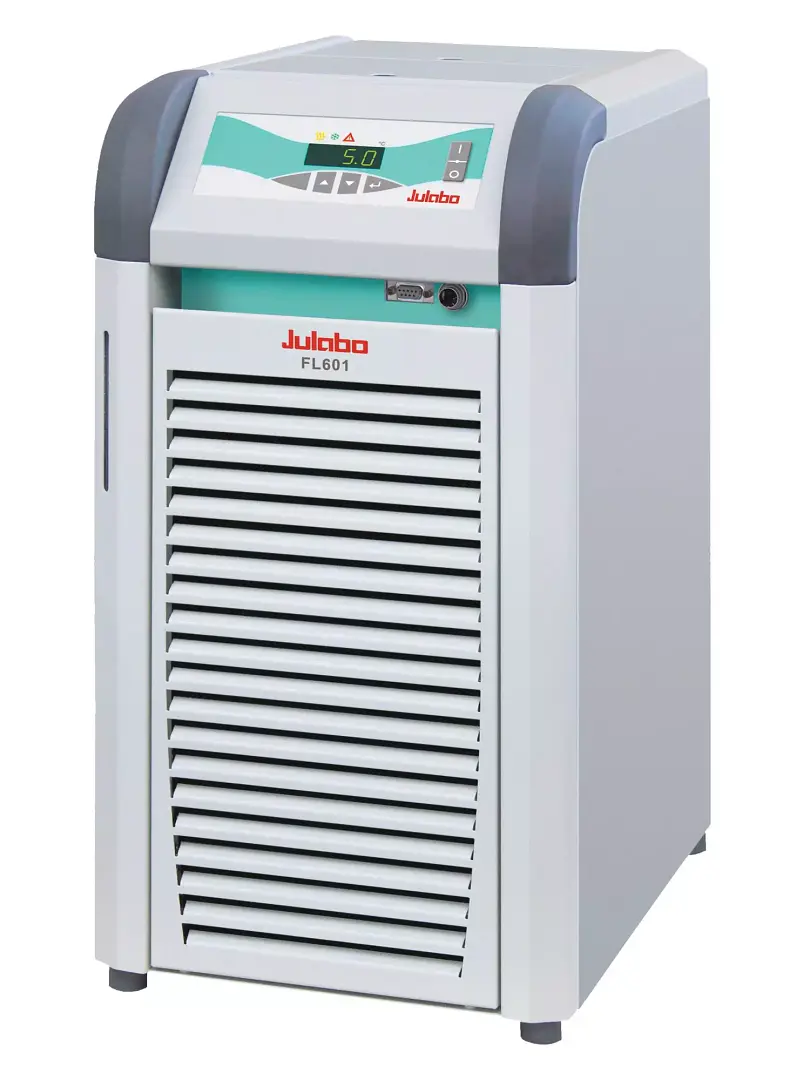 temperature-sensitive applications that can overlap with semiconductor research and production environments.
Julabo FL Series – Recirculating cooling systems used in research, electronics, process development, and industrial applications requiring consistent thermal control.
Huber Unichiller Series – High-performance temperature control systems commonly used in process development, laboratory research, electronics, and advanced manufacturing environments.
Why Used Semiconductor Chillers Can Offer Strong Value
Semiconductor fabs regularly upgrade, relocate, or decommission process equipment, creating a secondary market for used semiconductor chillers and temperature controller units. Many of these systems were originally paired with expensive wafer fabrication tools and may still have substantial useful life remaining.
Used chillers can be particularly valuable when supporting legacy semiconductor equipment. An older process tool may integrate more easily with its original chiller generation than with a newly manufactured replacement that uses different fittings, communications, or operating characteristics.
For buyers, a tested and complete used semiconductor chiller can reduce capital costs and shorten replacement lead times. For sellers, surplus chillers can retain meaningful resale value when they are kept complete, properly identified, and offered while demand for the associated semiconductor equipment remains strong.
Why Demand for Semiconductor Temperature Control Continues to Grow
The continued expansion of AI chips, advanced logic, memory, power semiconductors, and high-performance electronics is driving greater investment in semiconductor manufacturing infrastructure. As fabrication processes become more complex, the need for precise and dependable thermal management continues to increase.
Higher equipment density, tighter process windows, and more advanced wafer fabrication technologies place additional demands on temperature control systems. Semiconductor manufacturers need chillers capable of supporting continuous production while maintaining stable process conditions across changing thermal loads.
This growth also increases demand in the secondary equipment market. Fabs, research facilities, OEMs, and semiconductor equipment refurbishers frequently need compatible replacement chillers to keep existing process tools operating without the cost or lead time associated with completely new systems.
Choosing the Right Semiconductor Chiller
The best semiconductor liquid chiller or temperature controller is the one that matches the exact requirements of the process tool. Temperature range, cooling capacity, fluid type, flow, pressure, electrical configuration, and communication interfaces should all be verified before purchase.
For buyers of used semiconductor equipment, complete systems with known model numbers and documented configurations are often the most desirable. Matching the original or approved chiller configuration can reduce installation challenges and help return production equipment to service faster.
Whether supporting etch, deposition, lithography, metrology, vacuum systems, or other wafer fabrication processes, precision semiconductor temperature control equipment remains an essential part of modern chip manufacturing.
Looking for Semiconductor Chillers & Temperature Controllers?
Explore semiconductor chiller and temperature control equipment or consign your surplus semiconductor equipment to reach qualified buyers.
Visit us at ReBio.com to request a free valuation.