
HPLC degassers are an important part of high-performance liquid chromatography systems because they remove dissolved gases from the mobile phase before the solvent reaches the pump, injector, column, and detector. Air and other dissolved gases can create bubbles inside the flow path, leading to unstable pressure, detector noise, poor baseline performance, and inconsistent chromatographic results.
For laboratories maintaining or upgrading HPLC systems, UHPLC systems, liquid chromatography modules, and used chromatography equipment, a properly functioning degasser can improve system stability and reduce avoidable troubleshooting. Flow capacity, number of solvent channels, vacuum performance, membrane condition, software compatibility, and integration with the existing pump are all important considerations when evaluating an HPLC degasser.
What Is an HPLC Degasser?
An HPLC degasser is a solvent-conditioning module designed to remove dissolved gases from the mobile phase before it enters the high-pressure pumping system. Most modern HPLC degassers use vacuum-assisted membrane technology, allowing gases to pass through a gas-permeable membrane while the liquid solvent continues toward the pump. 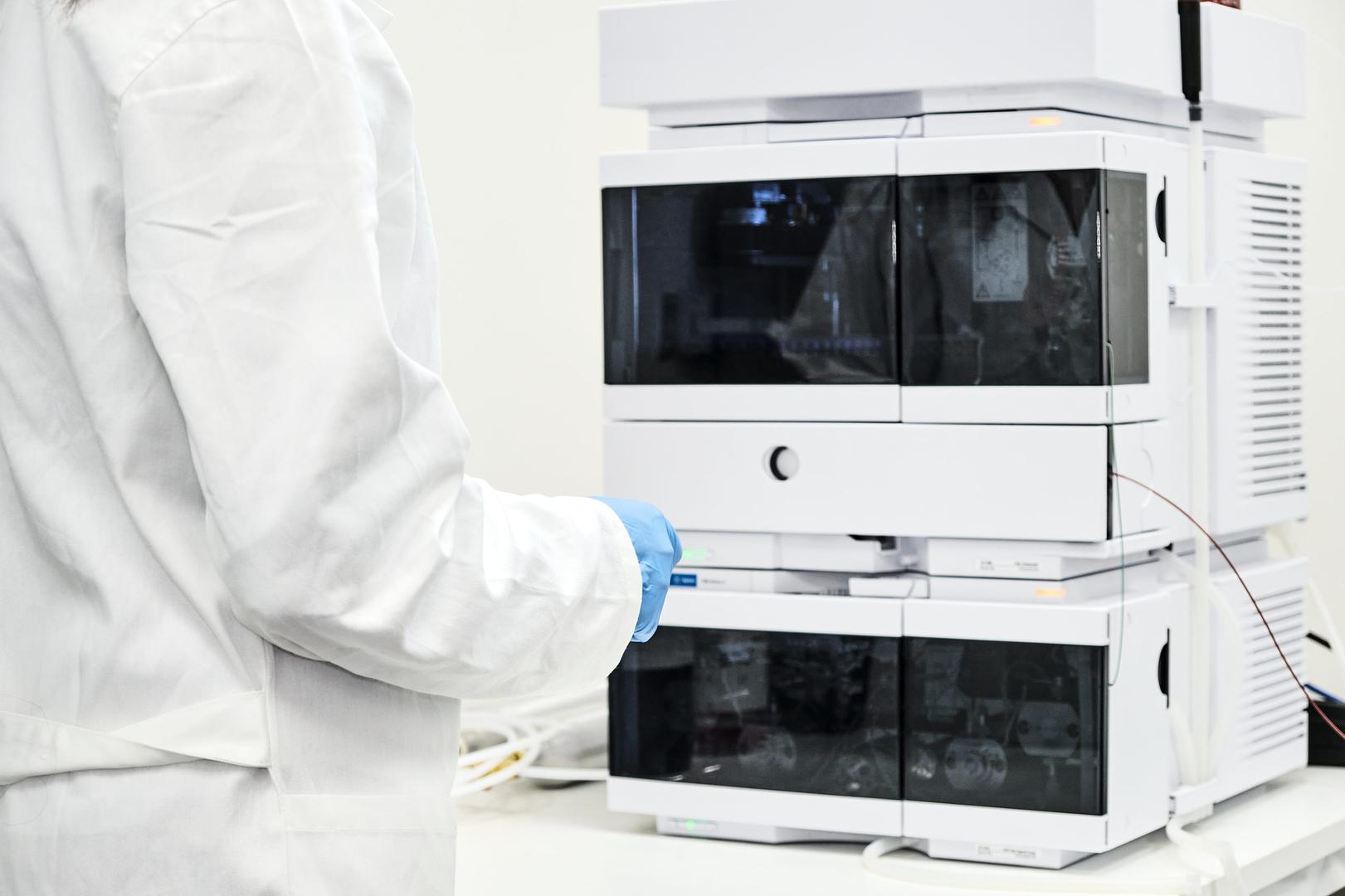
Degassing is important because solvents can absorb gases from the surrounding environment during storage and handling. Once the mobile phase is pressurized, mixed, heated, or moved through the chromatography system, those gases can come out of solution and form bubbles. A dedicated vacuum degasser continuously removes these dissolved gases during operation, helping maintain a more stable flow path. This is especially useful in gradient HPLC methods, where multiple solvents are blended and changing solvent composition can increase the likelihood of bubble formation.
Why Degassing Matters in HPLC
Bubbles inside an HPLC system can interfere with both fluid delivery and detection. If gas enters the pump head, it can cause pressure fluctuations, loss of prime, irregular flow, or inconsistent solvent delivery. Gas bubbles can also pass into the detector flow cell, where they may cause spikes, baseline noise, drift, or false peaks. This can make chromatograms more difficult to interpret and reduce the reproducibility of analytical methods. A reliable HPLC solvent degasser helps prevent these problems before they occur. Stable degassing supports more consistent pump performance, smoother baselines, and better retention-time reproducibility across repeated runs.
How HPLC Vacuum Degassers Work
Most modern HPLC degassers use a vacuum chamber and gas-permeable membrane tubing. The mobile phase flows through the membrane while a vacuum is applied around it, encouraging dissolved gases to migrate through the membrane and away from the solvent stream. The process occurs continuously while the HPLC system is operating. This allows the solvent to remain degassed without requiring constant manual preparation or offline vacuum treatment. Many systems include multiple independent channels so several solvents can be degassed at the same time. This is particularly useful in binary and quaternary HPLC systems, where two or more mobile phases may be blended during a gradient method.
Common Applications
HPLC degassers are used across pharmaceutical, biotechnology, chemical, environmental, food, and academic laboratories.
Common applications include:
- Routine analytical HPLC
- Gradient chromatography
- Pharmaceutical quality control
- Method development
- Protein and peptide analysis
- Environmental contaminant testing
- Chemical purity analysis
- Food and beverage testing
- LC-MS workflows
- UHPLC separations
Degassers are especially useful in methods where baseline stability and repeatable solvent delivery are critical. They are also important when mobile phases contain solvent mixtures that are more prone to releasing dissolved gas during operation.
Inline Degassers vs. Manual Solvent Degassing
Before inline vacuum degassers became common, laboratories often relied on sonication, vacuum filtration, helium sparging, or offline vacuum degassing to remove dissolved gases from mobile phases. These methods can still work, but they require additional preparation and may not keep the solvent degassed throughout a long run. Once a mobile phase is exposed to air again, it can gradually reabsorb gases. An inline HPLC degasser provides continuous treatment during operation, making it more convenient and consistent for routine analytical work. For laboratories running multiple sequences or long unattended methods, this can reduce manual preparation and improve day-to-day repeatability.
Degassers in Complete HPLC Systems
Within a complete HPLC system, the degasser is typically located upstream from the pump. Solvent travels from the reservoir through the degasser before entering the pumping and solvent-mixing components. This placement helps protect the pump from gas-related flow problems before the mobile phase is pressurized. In integrated HPLC platforms, the degasser may be built into the pump module or solvent management system rather than supplied as a separate instrument. Because of this, compatibility is important when replacing a failed degasser. A standalone module may work well in a custom chromatography setup, while an integrated system may require a specific manufacturer or instrument-family replacement.
What to Consider When Purchasing an HPLC Degasser
When purchasing a used HPLC degasser, the most important factors are solvent capacity, channel configuration, vacuum performance, and compatibility with the chromatography system.
Important considerations include:
- Number of solvent channels
- Maximum supported flow rate
- Vacuum pump condition
- Membrane condition
- Chemical compatibility
- Tubing and fitting configuration
- Communication interface
- Pump and system compatibility
- Leak condition
- Overall operating status
The membrane tubing is one of the most important internal components. Aging or damaged membranes can reduce degassing efficiency or create leaks, so condition matters significantly with used equipment. Vacuum pump performance should also be checked. If the internal vacuum system is weak, noisy, or unable to maintain the required vacuum level, the unit may not remove dissolved gases effectively.
Popular HPLC Degasser Platforms
Several manufacturers offer well-known HPLC vacuum degassers and solvent-management modules for liquid chromatography systems.
Agilent 1260 / 1200 Series Degasser Modules – Widely used vacuum degassers designed for Agilent HPLC systems. They are commonly paired with binary, quaternary, and isocratic pump configurations in pharmaceutical and analytical laboratories.
Waters Alliance Degasser / Solvent Management Modules – Integrated degassing components used in Waters Alliance HPLC systems to support stable solvent delivery and gradient performance.
Shimadzu DGU Series Degassers – Popular multi-channel vacuum degassers used with Shimadzu Prominence and related HPLC platforms. These modules are commonly used in analytical and pharmaceutical chromatography workflows. 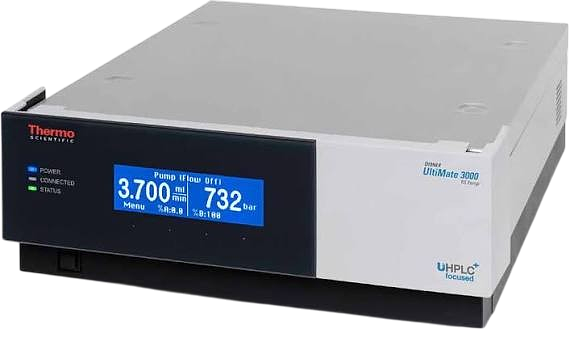
Thermo Scientific Dionex UltiMate 3000 Degasser Modules – Degassing systems integrated into or paired with UltiMate 3000 chromatography configurations for stable HPLC and UHPLC solvent delivery.
ERC Vacuum Degassers – Standalone degassing systems widely used in custom HPLC setups and as replacement modules for laboratories that need flexible solvent degassing.
Why Used HPLC Degassers Can Be a Smart Buy
A failed degasser can cause noticeable chromatography problems even when the rest of the HPLC system is functioning correctly. Replacing only the degassing module can restore stable operation without the cost of replacing an entire pump or chromatography system.
Used degassers can be particularly valuable for legacy HPLC platforms that are still supporting validated methods. Matching the original degasser family may help preserve existing plumbing, software, and method configurations.
Condition and completeness are key. A tested module with intact membranes, stable vacuum performance, correct fittings, and compatible power or communication hardware can provide strong value compared with a new replacement.
Choosing the Right HPLC Degasser
The best HPLC degasser is the one that matches the solvent configuration, flow rate, chemical environment, and HPLC platform already in use. A four-channel degasser may be useful for a quaternary system, while a simpler one- or two-channel unit may be sufficient for isocratic or binary chromatography.
Compatibility with tubing, fittings, pump architecture, and control electronics should be confirmed before installation. Integrated HPLC platforms may be less flexible than custom systems when it comes to replacing individual modules. By comparing channel count, vacuum performance, membrane condition, solvent compatibility, and overall system integration, laboratories can select an HPLC vacuum degasser that improves baseline stability, pump reliability, and chromatographic reproducibility.
Looking for HPLC Degassers & Chromatography Equipment?
Explore our inventory of used HPLC degassers, pumps, autosamplers, detectors, column compartments, and complete liquid chromatography systems, or consign your surplus analytical equipment to reach qualified buyers.
info@rebio.com