
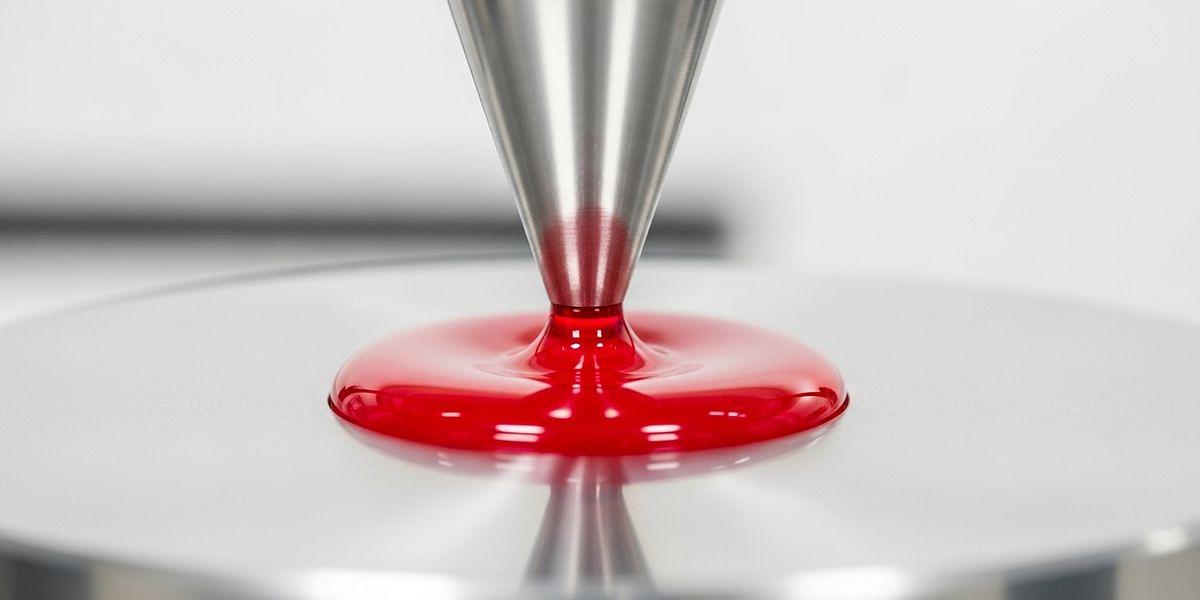
Rheometers and viscometers are essential instruments for measuring how liquids, semi-solids, suspensions, polymers, coatings, adhesives, foods, pharmaceuticals, and other materials flow or deform under applied force. These systems are widely used in materials science, chemical manufacturing, cosmetics, food and beverage, polymers, paints and coatings, pharmaceuticals, biotechnology, and quality control laboratories.
For laboratories and manufacturers comparing rheometers, rotational viscometers, viscosity analyzers, material flow testers, and used rheology equipment, the right instrument depends on the material being tested and the level of detail required. A basic viscometer may be ideal for routine viscosity checks, while a rheometer is better suited to advanced testing of shear behavior, elasticity, yield stress, and time-dependent material properties. Choosing the correct system can improve formulation development, quality control, process consistency, and product performance.
What Is a Viscometer?
A viscometer measures a fluid’s resistance to flow, commonly referred to as viscosity. In simple terms, it helps determine whether a material flows easily like water or resists movement more like syrup, oil, paint, or gel. Depending on the instrument, viscosity may be measured under a fixed rotational speed, spindle configuration, temperature, or other controlled condition.
Rotational viscometers are among the most common designs and use a spindle or measuring geometry immersed in the sample. The instrument measures the torque required to rotate through the material, providing a viscosity value that can be compared between batches or formulations. These systems are widely used for routine testing because they are straightforward, repeatable, and well suited to production QC. Viscometers are especially valuable when the main goal is confirming that a product remains within an established viscosity specification. They are commonly used for paints, lubricants, cosmetics, food products, coatings, adhesives, and pharmaceutical formulations where consistency between batches is critical.
What Is a Rheometer? 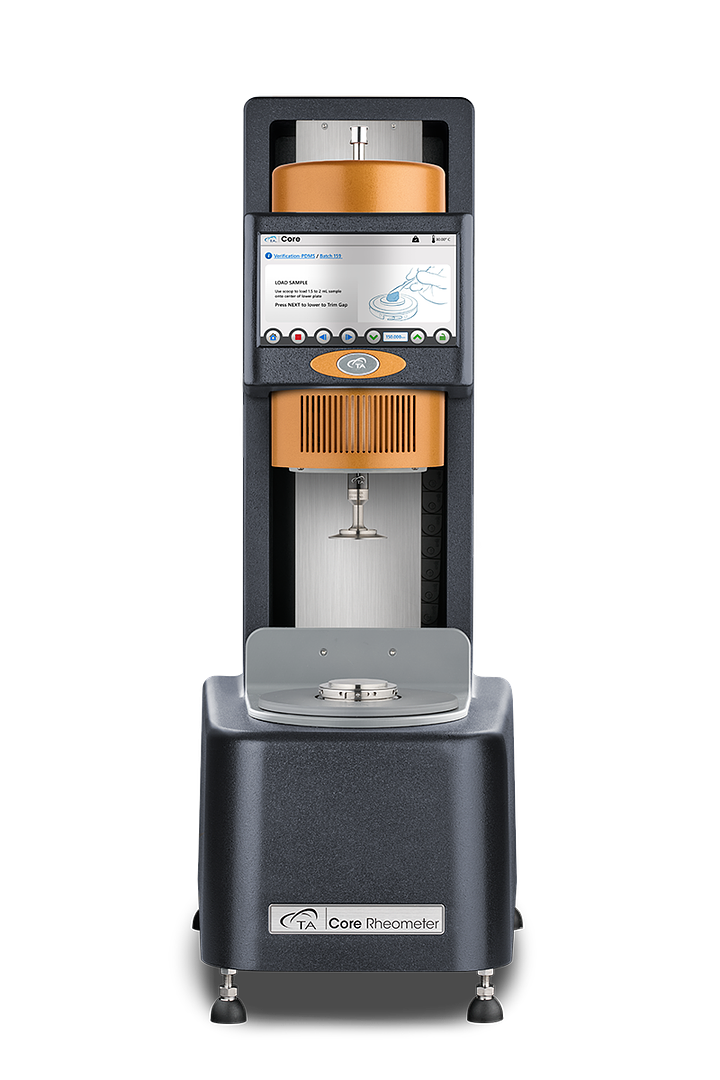
A rheometer provides a more detailed analysis of how a material flows and deforms under different conditions. In addition to viscosity, rheometers can measure properties such as shear stress, shear rate, yield stress, elasticity, viscoelasticity, thixotropy, and time-dependent flow behavior.
These instruments can vary temperature, rotational speed, oscillation, strain, and other test conditions to simulate how a material behaves during manufacturing, application, storage, or end use. This makes rheometers especially useful for complex materials that do not behave like simple Newtonian liquids. Rheometers are frequently used in formulation development, polymer research, pharmaceutical development, coatings, battery materials, food science, and advanced materials testing. They provide a much deeper understanding of material performance than a single viscosity measurement alone.
Rheometer vs. Viscometer: What’s the Difference?
A viscometer is typically used to measure viscosity under a defined set of conditions, while a rheometer evaluates a wider range of material flow and deformation properties. Both are used for viscosity testing, but they serve different levels of analytical complexity.
For routine quality control, a viscometer may provide all the information required. A paint manufacturer, for example, may simply need to confirm that each batch falls within a specified viscosity range. A rheometer becomes more useful when engineers need to understand how that paint responds to changing shear conditions during mixing, spraying, brushing, or storage. The choice should therefore be based on the questions the laboratory needs to answer. A higher-end rheometer may offer powerful capabilities, but it can be unnecessary for simple pass/fail viscosity measurements. Matching the instrument to the actual workflow helps avoid overspending while still delivering useful data.
Common Applications for Rheometers & Viscometers
Rheology and viscosity testing equipment is used across a wide range of industries.
Common applications include:
- Paints, coatings, and inks
- Adhesives and sealants
- Lubricants and oils
- Polymers and resins
- Pharmaceutical formulations
- Cosmetics and personal care products
- Food and beverage products
- Battery slurries
- Chemical manufacturing
- Research and materials development
In manufacturing, these systems help verify that material properties remain consistent from batch to batch. Changes in viscosity or flow behavior can indicate problems with formulation, temperature, raw materials, mixing, or storage conditions.
In R&D environments, rheometers are used to compare formulations and understand how materials behave under realistic processing conditions. This can help engineers optimize pumpability, spreadability, spray performance, stability, coating behavior, and other characteristics that directly affect product performance.
Rotational Viscometers for Routine Quality Control
Rotational viscometers are widely used for routine viscosity measurement because they are relatively easy to operate and can support a broad range of fluid viscosities. A spindle rotates within the sample while the instrument measures the resistance generated by the material.
These systems are especially common in QC laboratories where repeatable testing is more important than advanced rheological characterization. Operators can compare results against established specifications and quickly identify batches that fall outside the expected range. For facilities processing many similar products, a rotational viscometer can provide an efficient and cost-effective testing solution. Temperature control, spindle selection, sample volume, and rotational speed should be standardized carefully to ensure meaningful comparisons between measurements.
Advanced Rheometry for Material Development
Rotational rheometers are used when laboratories need to understand how material properties change under different forces, temperatures, or timescales. They can perform steady shear tests, oscillatory measurements, yield stress analysis, creep testing, and other advanced rheological methods.
This is especially useful for non-Newtonian materials, whose viscosity changes depending on shear rate or processing conditions. Examples include gels, creams, paints, suspensions, polymer melts, adhesives, and many pharmaceutical formulations. Advanced rheological data can help researchers predict how a product will behave during manufacturing and use. For example, a material may need to flow easily during pumping but remain stable once applied. Rheometry can provide the data needed to optimize these competing performance requirements.
Temperature Control and Why It Matters
Temperature can significantly affect viscosity and rheological behavior. Many liquids become thinner as temperature increases, while polymers, gels, and structured materials may undergo more complex changes.
Because of this, rheometers and viscometers with temperature control can provide more reliable and repeatable data. Integrated heating systems, circulating baths, Peltier plates, and environmental chambers are commonly used to maintain the sample at a defined temperature during testing. When comparing equipment, temperature range and control accuracy should be evaluated alongside viscosity or torque capability. A system that cannot maintain the required sample temperature may produce results that are difficult to compare with production conditions or established methods.
What to Consider When Purchasing a Rheometer or Viscometer
When purchasing a used rheometer or viscometer, the first step is determining the viscosity range and type of material that will be tested. Instrument capability can vary widely, and a system designed for low-viscosity liquids may not be suitable for thick pastes, polymer melts, or highly structured materials.
Important considerations include:
- Viscosity and torque range
- Rotational speed or shear-rate range
- Measuring geometries and spindle options
- Temperature-control capability
- Sample volume requirements
- Oscillatory testing capability
- Yield stress and viscoelastic testing
- Software and data-analysis tools
- Included accessories
- Overall instrument condition
The included measuring geometry can significantly affect value. Cone-and-plate, parallel plate, concentric cylinder, spindle sets, and specialized fixtures may be expensive to replace individually. A complete used system with multiple geometries can therefore provide much greater flexibility than a base instrument alone. Software and control hardware are also important, especially with advanced rheometers. Older systems may depend on specific computers, communication interfaces, or proprietary software licenses. Verifying what is included before purchase can prevent unexpected setup costs.
Recommended Rheometers & Viscometers
Below are several widely recognized rheometers and viscometers used in materials testing, manufacturing, research, and quality control.
Brookfield DVNext Viscometer – One of the most widely recognized rotational viscometers for routine viscosity testing. Brookfield instruments are commonly used in coatings, food, cosmetics, pharmaceuticals, chemicals, and manufacturing QC because of their broad installed base and straightforward testing workflow. 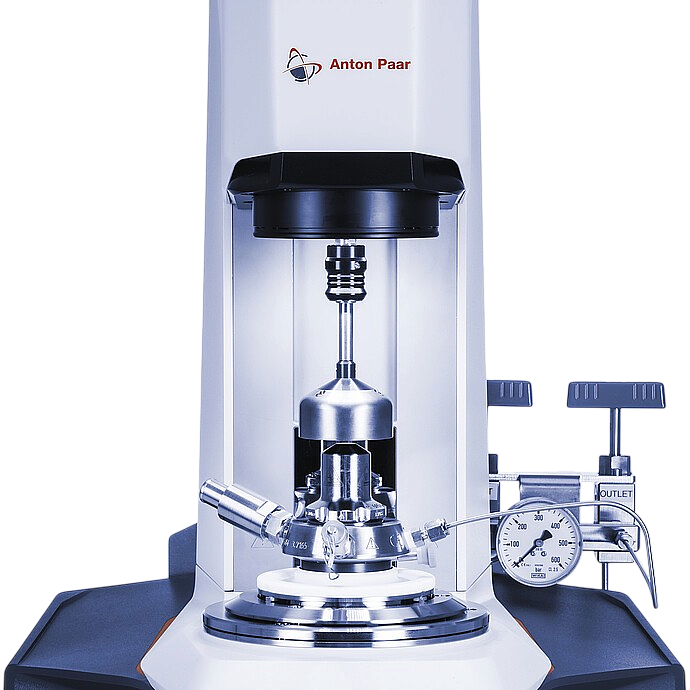
Anton Paar MCR Series Rheometers – Advanced modular rheometers widely used for materials characterization, polymers, pharmaceuticals, coatings, food science, and research. The MCR series supports sophisticated rotational and oscillatory rheology for laboratories that need more than basic viscosity measurements.
TA Instruments Discovery Hybrid Rheometer (DHR) – A well-known research-grade rheometer used for advanced viscosity, viscoelasticity, yield stress, and material characterization. It is popular in polymer science, formulations, battery research, and advanced materials development.
Thermo Scientific HAAKE MARS Rheometers – High-performance rheology platforms used in R&D, quality control, polymers, food, coatings, and pharmaceutical applications. These systems support a broad range of fixtures and temperature-control options.
AMETEK Brookfield CAP Series Viscometers – Cone-and-plate viscometers commonly used for higher-shear viscosity testing of paints, coatings, inks, and other formulated products. Their small sample requirements make them practical for both QC and formulation work.
Anton Paar ViscoQC Series – Modern rotational viscometers designed for routine laboratory and quality-control viscosity testing. These systems are well suited for users that need repeatable measurements without the complexity of a full research rheometer.
Why Used Rheometers & Viscometers Can Offer Strong Value
New rheology and viscosity testing equipment can represent a substantial investment, particularly when advanced torque measurement, temperature control, specialized geometries, and analysis software are included. A used system can provide access to proven instrumentation at a lower acquisition cost, making it attractive for research labs, manufacturers, universities, and expanding QC departments.
Used instruments can be especially valuable when a facility already operates the same platform or manufacturer. Staying within a familiar equipment family can simplify training, method transfer, accessory reuse, and software integration. Existing spindles, plates, fixtures, or temperature-control accessories may also remain compatible. Condition and completeness are more important than age alone. A well-maintained rheometer with the correct measuring geometries, temperature control, software, and accessories may offer much better value than a newer but incomplete instrument. Reviewing calibration history, torque performance, bearings, drive condition, and included hardware can help reduce unexpected costs after purchase.
Choosing the Right Rheology or Viscosity Testing System
The best rheometer or viscometer depends on the complexity of the material and the amount of information required. Routine viscosity testing generally favors a simple rotational viscometer, while formulation development and advanced materials research often benefit from a full rheometer capable of measuring viscoelastic and shear-dependent behavior.
Throughput should also be considered. QC laboratories may prioritize quick setup, repeatable methods, and easy operator training, while R&D groups may need flexibility, specialized geometries, and detailed software analysis. Temperature requirements and sample size can further narrow the field. By comparing viscosity range, torque, test modes, temperature control, accessories, software, and condition, laboratories can choose material flow and viscosity testing equipment that fits the application without paying for unnecessary capability. A properly selected system can support both product development and long-term quality control while delivering more consistent material performance data.
Looking for Rheometers, Viscometers & Material Testing Equipment?
Explore our inventory of used rheometers, rotational viscometers, viscosity analyzers, and laboratory material testing equipment, or consign your surplus instruments to connect with qualified buyers.
info@rebio.com