
Analytical Balances & Microbalances: Precision Weighing for Modern Laboratories

Analytical balances are among the most important precision instruments in pharmaceutical, biotechnology, chemistry, materials science, environmental, manufacturing, and academic laboratories. Designed to measure very small differences in mass, these systems support everything from reagent preparation and formulation development to quantitative chemical analysis and quality control. Depending on the required sensitivity, laboratories may use a precision balance, analytical balance, semi-micro balance, microbalance, or ultra-microbalance, with readability ranging from milligram levels down to microgram and sub-microgram measurements.
When selecting laboratory balances, analytical scales, precision balances, microbalances, or used analytical balances, maximum capacity alone tells only part of the story. Readability, repeatability, minimum sample weight, calibration, draft protection, vibration, static control, software compatibility, and the surrounding laboratory environment can all influence weighing performance. Choosing the right balance allows a laboratory to obtain the sensitivity it actually needs without paying for a microbalance when a standard analytical or precision balance would perform the application more effectively.
What Is an Analytical Balance?
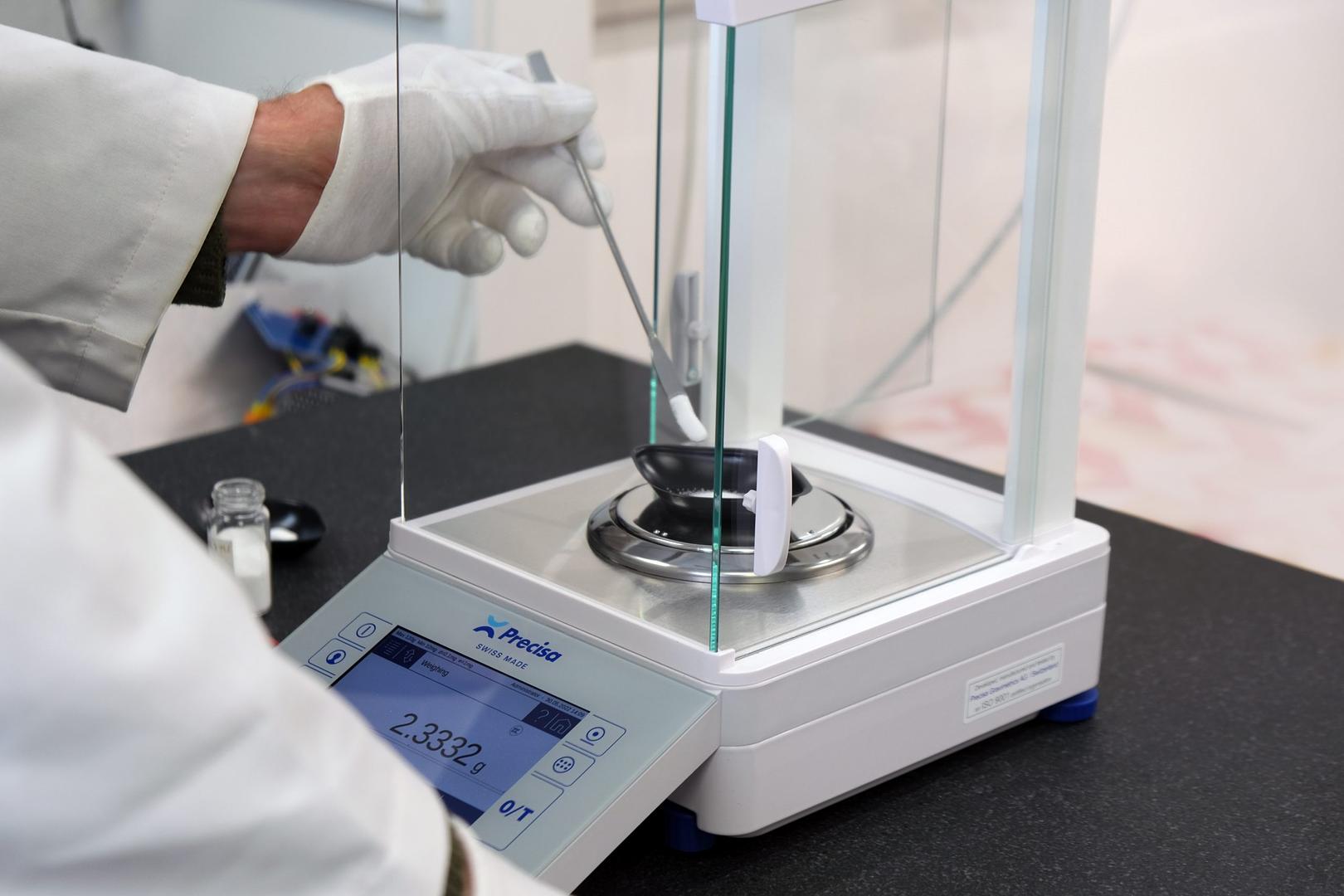
An analytical balance is a high-precision laboratory weighing instrument typically designed for applications requiring much finer measurements than a standard bench scale. Many analytical balances offer readability around 0.1 mg, allowing researchers to accurately weigh small quantities of chemicals, powders, standards, pharmaceutical ingredients, and other laboratory materials. Because air currents and environmental disturbances can influence measurements at this level, analytical balances commonly use an enclosed draft shield around the weighing pan.
Modern analytical balances often include automatic internal calibration, digital filtering, stability indicators, multiple weighing modes, data interfaces, and software connectivity. Higher-end platforms may also incorporate automatic leveling, static detection, ionization, user management, and method-based workflows. These features are especially useful in pharmaceutical, regulated, and high-throughput laboratories where consistent weighing procedures and reliable documentation are important.
Precision Balances vs. Analytical Balances
A precision balance generally offers greater weighing capacity but lower readability than a traditional analytical balance. Precision models may provide 1 mg, 10 mg, or similar readability and are well suited for larger samples, formulation work, production QC, and situations where sub-milligram resolution is unnecessary. Their larger weighing pans and higher capacities can make them more practical for containers, bulk powders, and routine laboratory preparation.
The Mettler Toledo XS403S, for example, is a precision balance rather than a conventional 0.1 mg analytical balance. It provides a maximum capacity of 410 g with 1 mg readability, making it useful for laboratories that need good precision while working with larger sample quantities. Matching readability to the actual method is important because purchasing sensitivity beyond what the application requires can increase cost and make the balance more susceptible to environmental disturbances without improving the usefulness of the result.
Semi-Micro, Micro & Ultra-Micro Balances
When measurements must go below the typical 0.1 mg analytical range, laboratories may move to semi-micro balances, microbalances, and ultra-microbalances. Semi-micro systems commonly reach 0.01 mg readability, while microbalance platforms can reach 0.001 mg and ultra-micro systems can extend even further. These instruments are used when extremely small changes in sample mass are analytically meaningful.
The greater the sensitivity, the more important environmental control becomes. Airflow, bench vibration, temperature changes, electrostatic charge, operator movement, and even handling of the weighing container can influence measurements. High-sensitivity balances therefore often incorporate smaller weighing chambers, advanced draft shields, ionization, specialized weighing tables, and automatic calibration systems to help improve measurement stability.
Where Precision Weighing Is Used
Analytical and microbalance systems support a broad range of laboratory workflows where precise mass measurements influence final analytical results.
Common applications include:
- Pharmaceutical formulation and compounding
- Preparation of analytical standards
- Quantitative chemical analysis
- Reagent and solution preparation
- Materials research
- Environmental sample analysis
- Gravimetric testing
- Food and chemical quality control
- Filter and particulate weighing
- Biotechnology and life science research
In pharmaceutical and chemical laboratories, small weighing errors can propagate through an entire analytical procedure, particularly when preparing reference standards or low-concentration solutions. Higher precision can therefore improve consistency in downstream chromatography, spectroscopy, formulation, and assay workflows. Research laboratories may also require microgram-level weighing when working with expensive compounds or very small sample quantities.
Industrial and quality-control environments often prioritize repeatability and throughput over maximum sensitivity. A 1 mg precision balance may be better suited to frequent batch measurements than a semi-micro balance that requires more careful environmental control. Understanding how the instrument will actually be used helps determine which balance class provides the best combination of precision, capacity, speed, and cost.
Why Readability and Repeatability Both Matter
Readability describes the smallest increment shown by the balance, but it should not be confused with overall weighing performance. A balance displaying 0.01 mg increments does not automatically guarantee that every measurement is accurate or repeatable to 0.01 mg under real laboratory conditions. Repeatability, linearity, minimum weight, calibration status, and environmental stability also influence the reliability of a weighing result.
Repeatability is particularly important when the same sample is weighed multiple times. A high-quality balance should produce closely grouped results when conditions remain consistent. Laboratories evaluating used analytical balances should therefore consider actual performance testing and calibration history rather than relying only on the number of decimal places shown on the display.
Calibration, Draft Protection & Environmental Control
Precision balances require a stable environment to perform correctly. Draft shields protect sensitive measurements from air movement, while vibration-isolation tables can reduce interference from nearby equipment, foot traffic, HVAC systems, and building movement. Temperature gradients can also create air currents inside the weighing chamber, so allowing samples and containers to reach room temperature can improve measurement stability.
Calibration is equally important. Many modern analytical balances include internal calibration weights and automated adjustment routines, while others rely on external certified weights. Systems such as Sartorius isoCAL and manufacturer-specific automatic adjustment technologies help compensate for changing conditions, but laboratories should still maintain appropriate calibration and verification procedures for their application.
Static Electricity and Difficult Samples
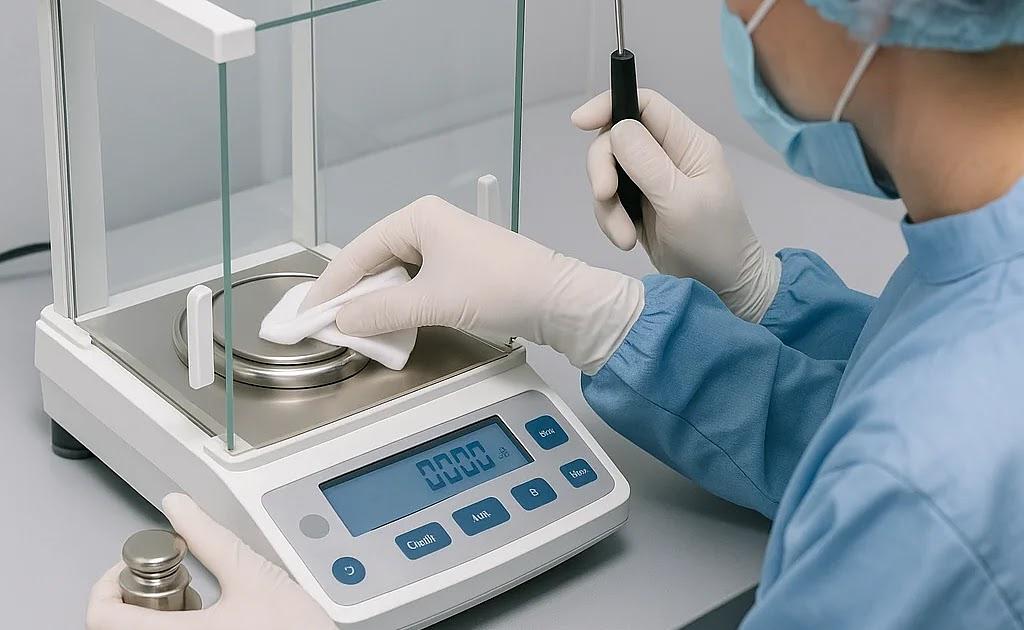
Electrostatic charge can become a significant source of error when weighing plastics, powders, filters, glassware, and other insulating materials. Static forces can attract or repel the sample or weighing container, producing unstable readings even when the actual mass has not changed. The problem becomes increasingly important as balance readability moves from milligrams into semi-micro and microgram ranges.
Some premium balances incorporate ionizers or anti-static systems to reduce these effects. The Sartorius Cubis MSA225S-100-DI, for example, combines a motorized draft shield with an integrated ionizer designed to reduce electrostatic interference inside the weighing chamber. Laboratories routinely weighing powders, plastic containers, filters, or small pharmaceutical samples may therefore benefit from considering static control as part of the purchasing decision rather than treating it as an optional accessory.
What to Consider When Purchasing an Analytical Balance
The best analytical balance or microbalance depends on the smallest sample that must be weighed accurately, the maximum load required, and the conditions under which the instrument will operate. A balance with extremely high readability may not provide useful results if it is installed next to vibrating equipment or strong airflow, while a lower-resolution precision balance may be entirely adequate for larger routine samples.
Important considerations include:
- Maximum weighing capacity
- Readability and repeatability
- Minimum practical sample weight
- Analytical, precision, semi-micro, or microbalance classification
- Internal or external calibration
- Draft shield configuration
- Anti-static or ionization capability
- Automatic leveling
- Stabilization and settling time
- Software and data connectivity
- Included calibration weights and accessories
- Overall mechanical and electronic condition
For used equipment, the weighing cell deserves particular attention. A balance can power on and display normally while still suffering from poor repeatability, calibration drift, leveling problems, or damage caused by overloading. Testing the instrument with appropriate calibration weights at multiple points across its range provides much more useful information than a simple power-on inspection.
Recommended Analytical, Precision & Microbalance Systems
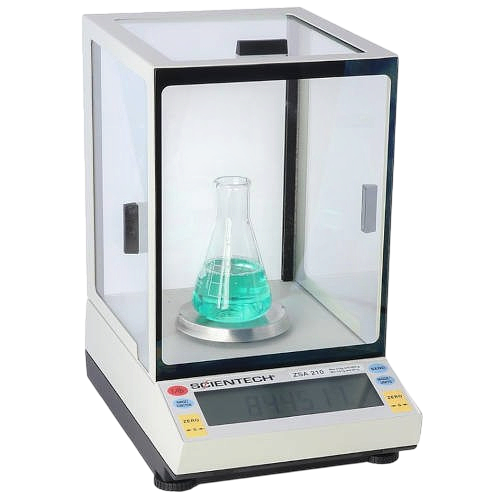
Scientech ZSA 80 Analytical Balance – A compact analytical balance from Scientech's Zeta Series with an 80 g capacity and 0.1 mg readability. It includes features such as automatic calibration programs, RS-232 connectivity, stability indication, percent weighing, parts counting, and selectable filtering, making it a practical analytical balance for routine laboratory precision weighing.
Mettler Toledo XS403S Precision Balance – A higher-capacity precision balance offering 410 g maximum capacity with 1 mg readability. The XS403S is well suited for formulation, sample preparation, and laboratory weighing applications where greater capacity is needed without moving into the more environmentally sensitive 0.1 mg analytical range.
Sartorius Cubis Semi-Micro Balance – A high-sensitivity Cubis platform with 220 g capacity and 0.01 mg readability. The DI configuration includes a motorized draft shield and integrated ionizer, making it especially attractive for pharmaceutical, analytical chemistry, powder, and other applications where static control and very small mass measurements are important.
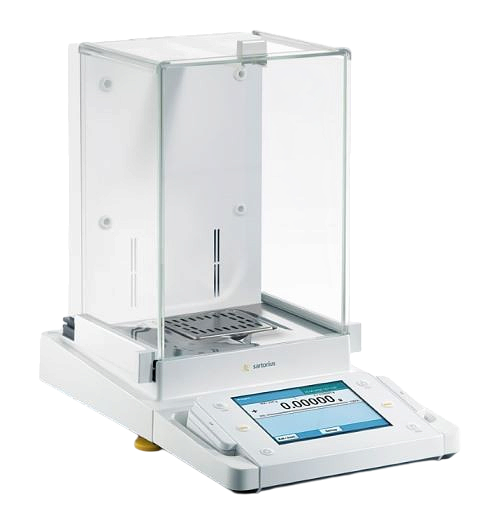
Sartorius Cubis II Semi-Micro & Analytical Balances – The current Cubis II family spans analytical, semi-micro, micro, and ultra-micro configurations. Depending on configuration, the platform can provide analytical readability down to 0.01 mg and micro or ultra-micro resolutions for laboratories requiring significantly greater sensitivity.
OHAUS Explorer Analytical Balances – A widely recognized balance family used in research, education, pharmaceutical, chemical, and quality-control laboratories. Explorer models are popular for routine analytical weighing where laboratories want a combination of touchscreen operation, internal calibration options, and established laboratory usability.
Why Used Analytical Balances Can Be a Smart Investment
High-end analytical balances, semi-micro balances, and microbalances can represent a substantial investment, particularly when automatic draft shields, ionizers, advanced calibration systems, data-management software, and microgram-level weighing cells are included. Purchasing a tested used balance can provide access to premium equipment at a lower acquisition cost, making it especially attractive for startups, university laboratories, contract testing facilities, and organizations adding additional weighing stations.
Used equipment can also be valuable when a laboratory already operates a specific balance family. Existing SOPs, calibration procedures, software, printers, data interfaces, and operator familiarity may transfer directly to another unit of the same platform. A complete older premium balance in good condition can therefore provide greater practical value than a lower-cost new system with less suitable capacity, readability, or workflow compatibility.
Choosing the Right Balance for Your Laboratory
The best approach is to purchase the least sensitive balance that still comfortably satisfies the method's weighing requirements. Routine preparation involving gram-level samples may be better served by a precision balance, while quantitative chemistry and pharmaceutical work may justify a 0.1 mg analytical balance. Semi-micro and microbalance systems should be selected when the actual sample size or analytical method requires their additional sensitivity.
Capacity should be considered at the same time as readability. The Scientech ZSA 80 provides traditional 0.1 mg analytical performance for smaller samples, the Mettler Toledo XS403S sacrifices some readability for substantially greater working capacity, and the Sartorius Cubis MSA225S-100-DI moves into semi-micro weighing with 0.01 mg readability. Understanding these distinctions allows laboratories to select precision weighing equipment around actual sample requirements rather than assuming that the balance with the greatest number of decimal places is automatically the best choice.
Need Precision Weighing Equipment for Your Laboratory?
Explore our inventory of used analytical balances, precision balances, semi-micro balances, microbalances, and laboratory weighing equipment, or consign surplus instruments to reach qualified laboratory and industrial buyers.
info@rebio.com