
Automatic Titrators for Precise Chemical Analysis and Quality Control
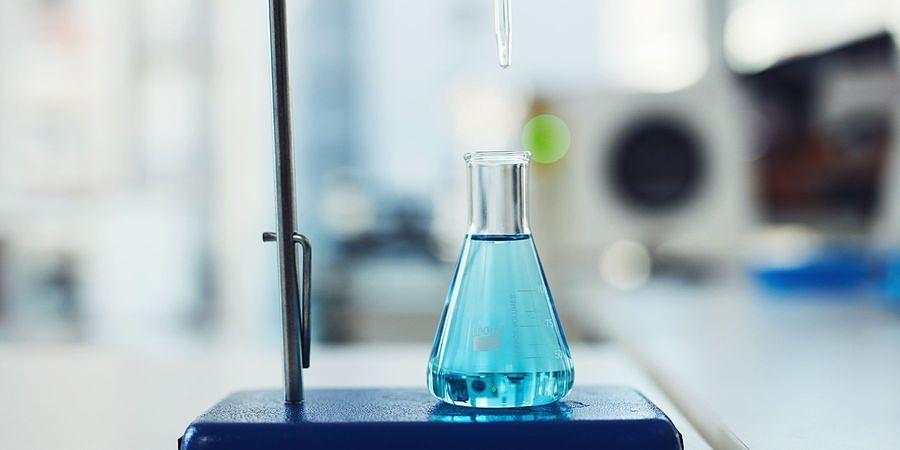
Automatic titrators are widely used in pharmaceutical, chemical, food and beverage, environmental, petrochemical, water testing, cosmetics, and quality-control laboratories to determine the concentration of substances through controlled titration. These systems automate reagent delivery, endpoint detection, calculation, and data recording, allowing laboratories to replace manual burette-based methods with more repeatable and efficient analysis. Depending on the application, titrators may support acid-base titration, redox titration, precipitation titration, complexometric titration, Karl Fischer analysis, and potentiometric methods.
Organizations comparing automatic titrators, potentiometric titrators, laboratory titration systems, pH titrators, and used titration equipment should consider dosing accuracy, electrode compatibility, sample throughput, burette configuration, software, automation, method storage, and serviceability. A routine QC lab may need a straightforward potentiometric system, while a pharmaceutical or petrochemical facility may require multiple burettes, advanced method programming, autosampling, and stronger data-management capabilities. Selecting the right titrator can improve repeatability, reduce technician involvement, and standardize analytical workflows across multiple users.
What Is an Automatic Titrator?
An automatic titrator is a laboratory instrument that performs titration by precisely dispensing a reagent into a sample while monitoring a measurable property such as pH, potential, conductivity, or color response. The instrument determines the endpoint or equivalence point and calculates the concentration of the analyte based on reagent volume and method parameters. This removes much of the subjectivity associated with manually judging color changes or reading burette volumes.
Modern titrators often include motor-driven burettes, interchangeable electrodes, automated stirring, method memory, data export, and software-based calculations. Many systems can also control multiple dosing units, allowing laboratories to switch between different titrants without manually rebuilding the setup. These features make automatic titration especially useful for repetitive testing where consistency between operators is important.
Potentiometric Titration and How It Works
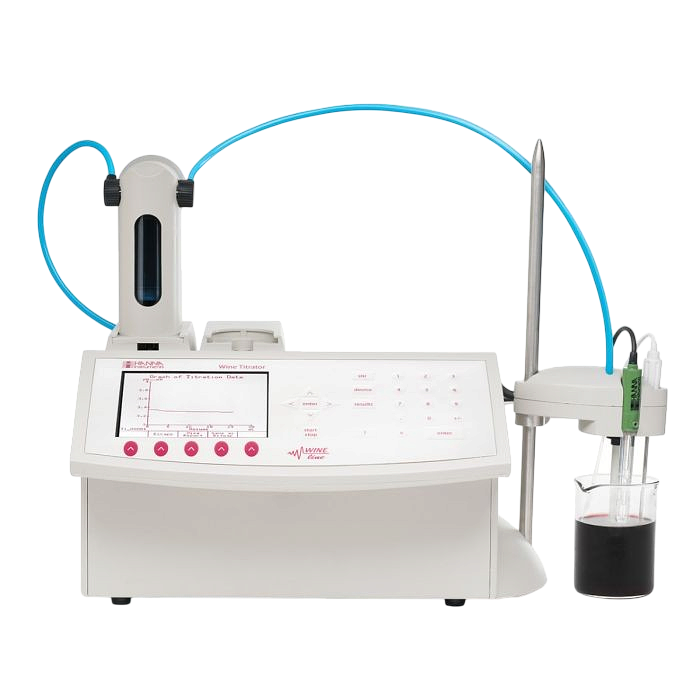
Potentiometric titration is one of the most common automatic titration methods and measures changes in electrical potential as reagent is added to the sample. The titrator uses an appropriate electrode to monitor the reaction and determine the point where the chemical relationship between sample and titrant changes most significantly. This approach can provide a more objective endpoint than visual indicators, particularly with colored, cloudy, or opaque samples.
Potentiometric methods are used for acid-base, redox, precipitation, and complexometric titrations across many industries. Laboratories can often automate complete methods, including reagent addition rate, stirring time, endpoint criteria, blank correction, and final calculations. This improves consistency and makes it easier to transfer validated methods between operators or instruments.
Common Applications for Automatic Titrators
Laboratory titrators are used in a wide range of analytical and quality-control applications.
Common applications include:
- Acid and base concentration testing
- Water alkalinity and acidity
- Chloride determination
- Food acidity testing
- Pharmaceutical assay analysis
- Petrochemical acid and base numbers
- Chemical purity testing
- Environmental water analysis
- Redox and oxidation-reduction testing
- Complexometric metal analysis
In pharmaceutical and chemical laboratories, automatic titration can support raw-material verification, assay testing, formulation analysis, and production QC. Standardized dosing and endpoint detection help reduce variability when the same method is performed repeatedly across multiple batches or shifts.
Food, beverage, water, and environmental laboratories also rely heavily on titration because many routine measurements are concentration-based. Acidity, alkalinity, chloride, hardness, and related parameters can often be determined faster and more consistently with automated titration than with manual glassware methods.
Automatic vs. Manual Titration
Manual titration requires an operator to control reagent addition, watch for an endpoint, read the burette, and calculate the result. This approach remains useful for simple or low-volume applications, but results can vary based on operator technique, endpoint interpretation, and reading accuracy. Manual methods can also become time-consuming when a laboratory performs many similar tests each day.
An automatic titration system standardizes reagent addition and endpoint detection, helping reduce operator-dependent variation. Automated methods can also save results, calculate concentrations immediately, and support electronic documentation. For higher-throughput QC laboratories, the improvement in consistency and labor efficiency can make automation much more valuable than the initial instrument cost alone.
Burettes, Electrodes & Method Compatibility
The burette system is one of the most important parts of an automatic titrator because reagent volume directly affects the final result. Different titration methods may require different burette sizes, reagent materials, dosing speeds, and chemical-resistant components. Systems with interchangeable burettes can provide greater flexibility when laboratories run multiple methods on the same platform.
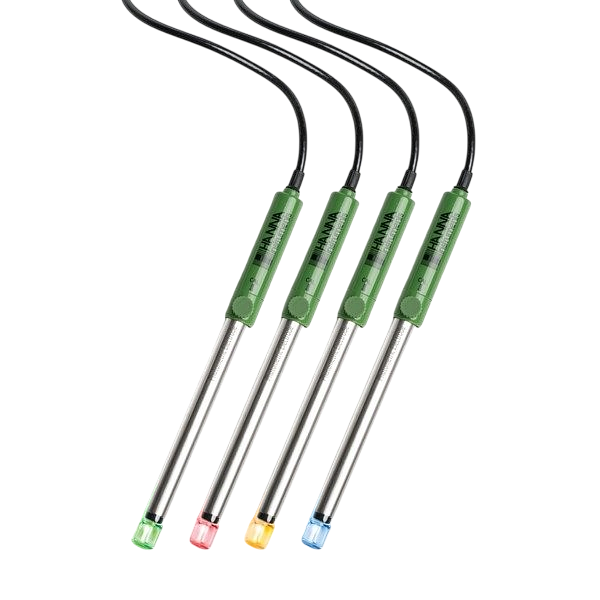
Electrode selection is equally important. pH electrodes, oxidation-reduction electrodes, ion-selective electrodes, silver electrodes, and other sensors are designed for different reactions and sample types. A titrator should therefore be evaluated as a complete analytical system rather than only by the base instrument, since the correct burette, electrode, stirrer, tubing, and reagent setup all influence performance.
What to Consider When Purchasing a Titrator
When purchasing a used automatic titrator, the first consideration should be whether the instrument supports the required method and electrode type. The number of burettes, dosing-unit compatibility, reagent resistance, and software capability should all be reviewed before comparing price.
Important considerations include:
- Potentiometric or other titration method
- Number of burettes and dosing units
- Burette volume and accuracy
- Electrode compatibility
- Automatic endpoint detection
- Sample throughput
- Method storage
- Autosampler compatibility
- Software and data export
- GLP or audit-trail features where required
- Replacement electrode and reagent availability
- Overall instrument condition
Used equipment should be checked carefully for burette leaks, worn seals, dosing errors, damaged tubing, electrode condition, stirrer performance, and communication problems. A system that powers on normally may still require service if the dosing mechanism is inaccurate or the electrode input is unstable.
Software and accessories can also significantly affect value. A complete system with burettes, electrodes, stirrer, dosing heads, tubing, software, computer, and manuals may be far easier to return to service than a bare titrator missing critical components.
Recommended Automatic Titrators
Hanna HI932 Automatic Potentiometric Titrator – A versatile automatic potentiometric titrator designed for acid-base, redox, complexometric, and precipitation titrations. The HI932 supports programmable methods, automatic endpoint detection, multiple electrode types, and precise reagent dosing, making it suitable for pharmaceutical, food, chemical, water-quality, and general QC laboratories.
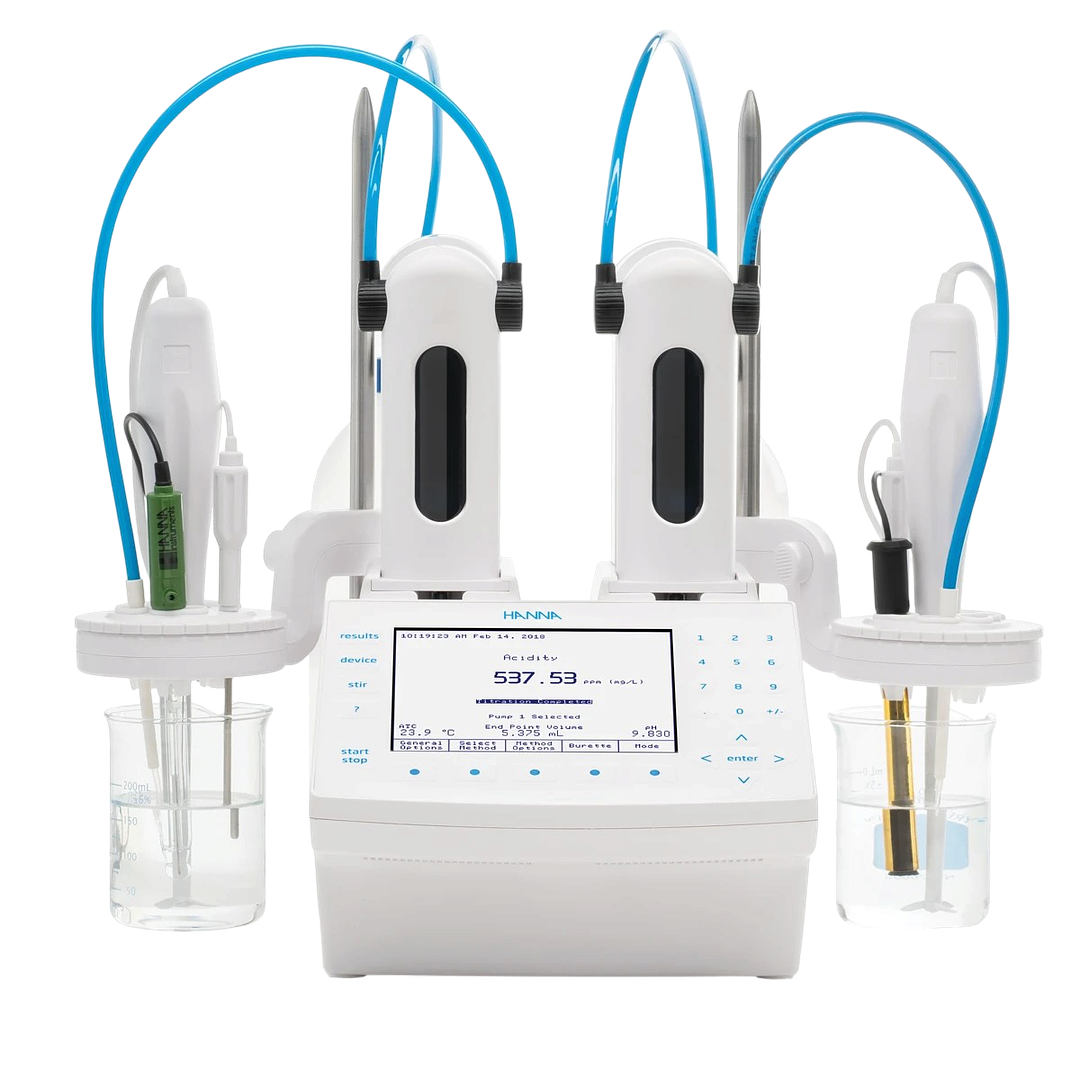
Metrohm 905 Titrando – A widely recognized high-end potentiometric titrator used in pharmaceutical, chemical, petrochemical, food, and regulated laboratory environments. The Titrando platform supports advanced automation, flexible dosing, method programming, and integration with Metrohm autosamplers and software.
Mettler Toledo T5 Excellence Titrator – A premium automatic titration platform designed for routine and advanced analytical workflows. The T5 is well known for touchscreen operation, method automation, flexible burette configurations, and integration with sample changers and laboratory data systems.
Metrohm 888 Titrando – A well-established potentiometric titrator used for routine and advanced chemical analysis. It supports a wide range of electrodes and titration methods and remains common in QC, environmental, chemical, and industrial laboratories.
Mettler Toledo EasyPlus Titrators – Compact automatic titrators designed for routine laboratory testing where simplicity and repeatability are priorities. These systems are well suited for acid-base, redox, precipitation, and other standard titration methods in QC and production environments.
Hach AT1000 Series Titrators – Automatic titration systems commonly used for water, environmental, food, beverage, and industrial quality-control applications. They are designed for straightforward operation and routine concentration measurements with standardized methods.
Why Used Automatic Titrators Can Offer Strong Value
New automatic titration systems can become expensive once additional burettes, electrodes, autosamplers, software, and data-management features are included. A tested used titrator can provide access to well-established analytical technology at a substantially lower acquisition cost, making it attractive for expanding laboratories, startups, universities, and facilities adding backup analytical capacity.
Used equipment can be particularly valuable when a laboratory already operates the same titrator family. Existing methods, burettes, electrodes, spare parts, software, and operator training may remain compatible, reducing implementation time and avoiding the need to rebuild validated workflows. A complete older system with strong accessory support can therefore provide more practical value than a newer but incomplete instrument.
Choosing the Right Titration System
The right automatic titrator depends on the chemistry being measured, sample volume, throughput, number of methods, and level of automation required. Routine acid-base testing may only require a simple single-burette system, while a pharmaceutical or petrochemical laboratory may benefit from multiple dosing units, autosampling, advanced software, and broader electrode compatibility.
Operating cost should also be considered alongside purchase price. Electrodes, burette seals, tubing, reagents, standards, and other consumables require periodic replacement, and availability can vary between older platforms. By comparing method capability, dosing performance, software, automation, accessories, and overall condition, laboratories can choose titration equipment that provides reliable analytical performance without paying for unnecessary complexity.
Looking for Automatic Titrators & Laboratory Analytical Equipment?
Explore our inventory of used automatic titrators, potentiometric titrators, pH meters, water-analysis systems, and analytical laboratory equipment, or consign surplus instruments to connect with qualified buyers.