
Rotary Evaporators for Solvent Removal, Concentration & Laboratory Recovery
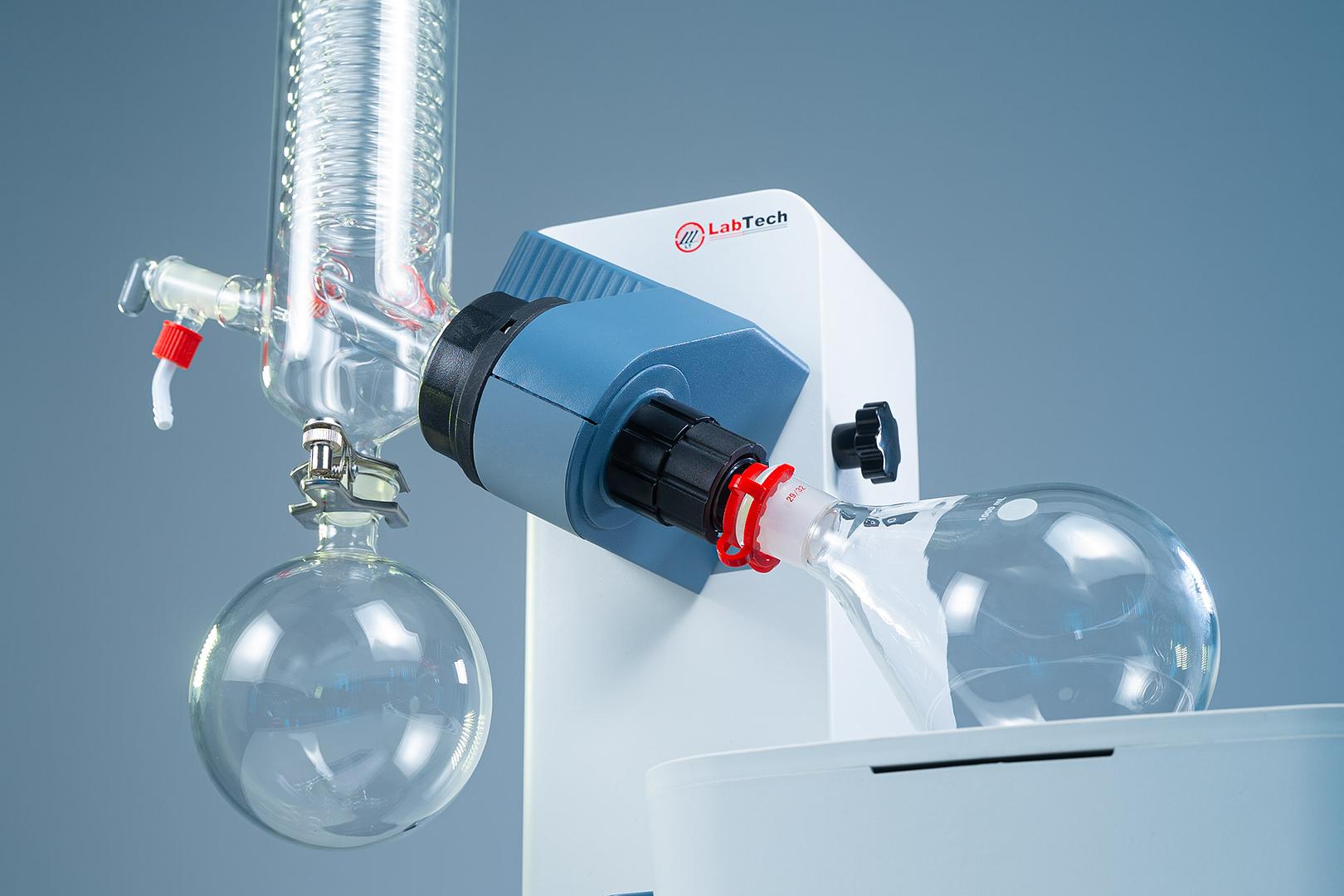
Rotary evaporators, often called rotovaps, are widely used in chemistry, pharmaceutical research, biotechnology, food science, cannabis and botanical extraction, materials research, and academic laboratories to remove solvents efficiently under reduced pressure. By combining controlled heating, vacuum, flask rotation, and condensation, these systems can evaporate solvents at lower temperatures than standard atmospheric boiling, helping protect heat-sensitive compounds while speeding up concentration and solvent recovery.
Laboratories comparing rotary evaporators, vacuum evaporators, solvent recovery systems, laboratory evaporators, and used rotovaps should consider flask capacity, condenser orientation, vacuum control, bath temperature, rotation speed, lift mechanism, receiving-flask size, and compatibility with pumps and chillers. A small benchtop system may be ideal for routine sample concentration, while larger-volume workflows may require higher-capacity evaporators, stronger vacuum control, or automated solvent handling. Choosing the right rotovap can improve recovery efficiency, reduce solvent waste, and make sample preparation more consistent.
What Is a Rotary Evaporator?
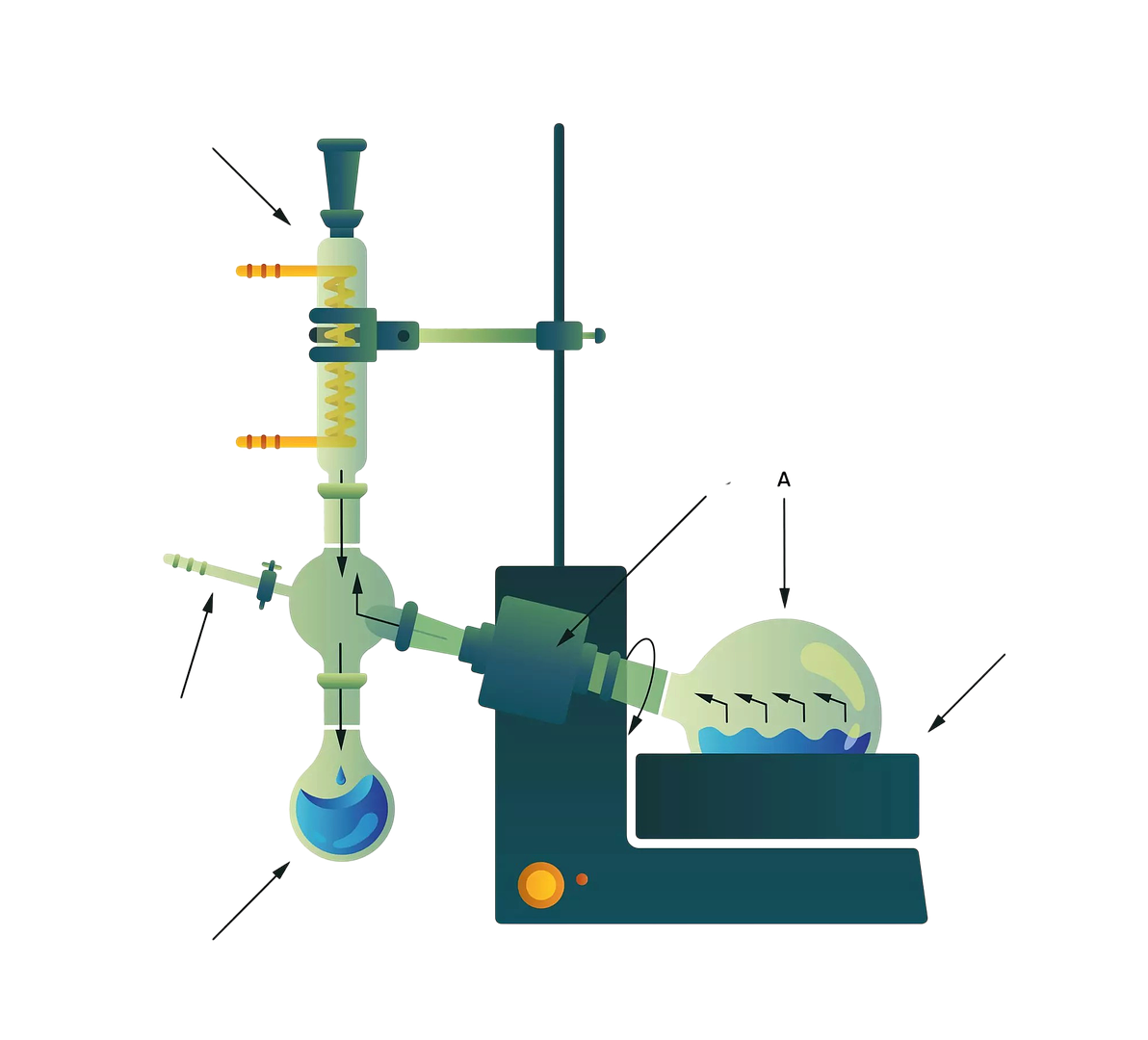
A rotary evaporator is a laboratory instrument designed to remove solvents from liquid mixtures by evaporating them under reduced pressure. The sample is placed in a rotating evaporation flask that is partially immersed in a heated water or oil bath, while a vacuum lowers the boiling point of the solvent. The vapor then travels into a condenser, where it cools and collects in a separate receiving flask.
The rotating flask increases the surface area of the liquid and helps form a thin film along the inside of the vessel, which improves evaporation efficiency. This combination of rotation, vacuum, and controlled heating allows solvents to be removed more quickly and gently than with simple boiling. Because of this, rotary evaporators are common in workflows involving concentration, solvent exchange, purification, and recovery.
How Rotary Evaporation Works
The core principle behind rotary evaporation is lowering the pressure inside the system so the solvent boils at a lower temperature. This is especially useful when the target compound is heat-sensitive or when the solvent would otherwise require aggressive heating. Vacuum level, bath temperature, rotation speed, and condenser temperature all work together to determine how efficiently the solvent is removed.
As the flask rotates, the liquid spreads into a thin film, increasing the effective evaporation area and reducing bumping. The solvent vapor then passes into the condenser, where chilled water or another cooling medium removes heat and converts the vapor back into liquid. That recovered solvent collects in the receiving flask and may be reused or disposed of according to the laboratory’s process.
Common Applications for Rotary Evaporators
Rotary evaporators are used in a wide range of analytical, research, and production workflows.
Common applications include:
- Solvent removal
- Sample concentration
- Solvent recovery
- Solvent exchange
- Organic synthesis
- Pharmaceutical research
- Natural product extraction
- Botanical and cannabis processing
- Food and flavor research
- Chemical purification
- Research-scale formulation work
- Academic chemistry laboratories
In synthetic chemistry, rotovaps are commonly used after reactions or extractions to remove solvents before purification or analysis. In pharmaceutical and biotechnology research, they can concentrate compounds while minimizing unnecessary thermal exposure. Extraction laboratories often use them to recover ethanol or other solvents from processed material.
The same equipment can support both routine sample preparation and more specialized research workflows. Because many laboratories already use vacuum pumps, recirculating chillers, and glassware systems, a rotary evaporator can often integrate easily into an existing setup.
Why Vacuum Control Matters
Vacuum control is one of the most important parts of rotary evaporation because it directly affects solvent boiling temperature and evaporation rate. Too little vacuum may result in slow evaporation, while excessive vacuum can cause violent boiling, bumping, foaming, or loss of sample into the condenser. A stable and adjustable vacuum makes it easier to maintain controlled evaporation.
More advanced systems may use digital vacuum controllers that automatically regulate pressure based on the solvent or programmed method. This can improve repeatability and reduce the amount of manual adjustment required during a run. Laboratories processing multiple solvent types may benefit especially from precise vacuum control because different solvents require different operating conditions.
When purchasing a used rotovap, the vacuum pump should be evaluated separately from the evaporator itself. Pump condition, chemical compatibility, ultimate vacuum, tubing, seals, and traps all affect real-world performance.
Vertical vs. Diagonal Condensers
Rotary evaporators are available with different condenser configurations, including vertical and diagonal condensers. A vertical condenser is compact and often preferred when bench space is limited because it keeps the glassware footprint relatively narrow. It can also provide efficient condensation when paired with an appropriately sized chiller or cooling-water source.
Diagonal condensers are common on many traditional rotovaps and can provide good solvent recovery while offering easy access to the receiving flask and glassware. The best configuration depends on the bench layout, solvent volume, cooling capacity, and operator preference.
For many laboratories, condenser orientation is less important than condenser surface area and cooling performance. A system with insufficient cooling capacity may allow solvent vapor to pass through the condenser, reducing recovery efficiency and increasing vapor exposure in the lab.
Bath Temperature and Rotation Speed
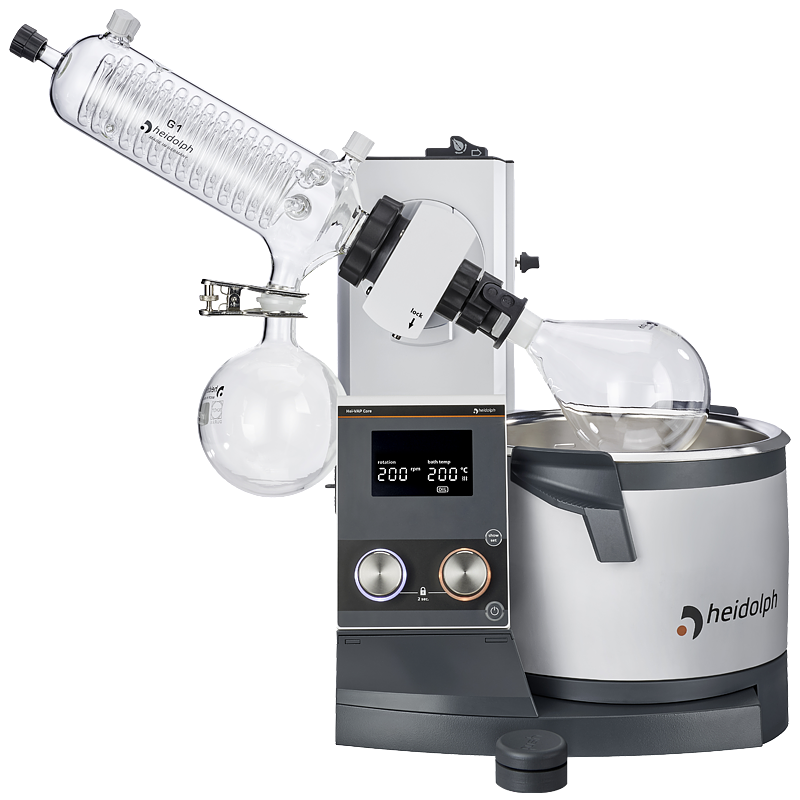
The heating bath provides controlled thermal energy to the evaporation flask, while rotation helps distribute the sample into a thin film. Water baths are common for lower-temperature solvent work, while oil baths may be used when higher process temperatures are required. Precise temperature control helps prevent overheating and improves method repeatability.
Rotation speed can also affect performance. Faster rotation generally increases the liquid film area and can improve evaporation, but excessive speed may cause splashing or unstable operation depending on the sample and flask size. The optimal setting depends on viscosity, solvent properties, flask fill level, and vacuum strength.
A system with adjustable bath temperature and rotation speed gives operators more flexibility when working with different sample types. These controls are especially useful in multi-user research laboratories where one rotovap may support several applications.
Manual vs. Automated Rotary Evaporators
Traditional manual rotary evaporators require the operator to set bath temperature, rotation, vacuum, and flask position manually. These systems remain popular because they are straightforward, relatively easy to maintain, and suitable for many routine research applications. For lower-throughput laboratories, a manual rotovap may provide all the functionality needed at a lower acquisition cost.
More advanced platforms can automate lift control, pressure regulation, solvent detection, and method programming. Automated systems may reduce operator attention and improve repeatability, especially when many samples are processed each day. In pharmaceutical, process-development, and extraction environments, automation can also help standardize methods across operators.
The best choice depends on workload and process complexity. A research lab performing a few evaporations per day may not benefit from high-end automation, while a high-throughput facility may save significant time by using programmable controls.
What to Consider When Purchasing a Rotary Evaporator
When purchasing a used rotary evaporator, the first consideration should be the sample and flask volume required for the application. A compact 1–2 L system may be ideal for analytical chemistry, while larger-volume workflows may require 5 L, 10 L, or greater capacity.
Important considerations include:
- Maximum flask size
- Condenser orientation
- Condenser surface area
- Vacuum control
- Rotation speed range
- Bath temperature range
- Manual or motorized lift
- Vacuum pump compatibility
- Chiller or cooling-water requirements
- Glassware completeness
- Seal condition
- Included receiving flask
- Overall mechanical and electrical condition
Glassware and seals deserve particular attention. Cracked condensers, chipped joints, worn vapor-duct seals, or missing flasks can significantly affect both safety and performance. A complete used system with condenser, evaporation flask, receiving flask, vapor duct, seals, and bath can provide far better value than a lower-priced base unit missing essential components.
Recommended Rotary Evaporators
BUCHI Rotavapor R-300 – A modern and widely recognized laboratory rotary evaporator designed for controlled solvent evaporation, concentration, and recovery. The R-300 platform is popular in pharmaceutical, chemical, academic, food, and extraction laboratories, and the vertical condenser configuration is especially practical where compact bench layout and efficient solvent recovery are priorities.
BUCHI Rotavapor R-210 / R-215 – Well-established rotary evaporator systems commonly found in chemistry, pharmaceutical, and academic laboratories. These models are known for dependable operation and remain popular in the used market because of their broad accessory and glassware support.
Heidolph Hei-VAP Series – A widely recognized family of rotary evaporators used for research, synthesis, and solvent recovery. Hei-VAP systems are available in manual and more automated configurations and are commonly paired with Heidolph vacuum pumps and chillers.
IKA RV 10 Series – Popular laboratory rotovaps used for routine solvent evaporation and concentration. The RV 10 family is well suited for research and QC labs that want a compact system with digital control and flexible glassware options.
Yamato RE Series Rotary Evaporators – Established rotary evaporation systems used in academic, research, pharmaceutical, and chemical laboratories. Yamato models are known for straightforward operation and remain common in general-purpose solvent removal workflows.
EYELA N-1300 Series Rotary Evaporators – Recognized laboratory rotovaps used for solvent evaporation, concentration, and research-scale processing. EYELA systems are widely used in chemistry and life-science environments and offer multiple condenser and control configurations.
Why Used Rotary Evaporators Can Offer Strong Value
New rotary evaporator systems can become expensive once vacuum pumps, chillers, glassware, controllers, and automation are included. Purchasing a tested used rotovap can provide access to proven laboratory equipment at a much lower acquisition cost, making it attractive for startups, university labs, contract laboratories, and facilities expanding solvent-processing capacity.
Used systems can be especially valuable when a laboratory already operates the same manufacturer or platform family. Existing flasks, condensers, vacuum controllers, pumps, and operating procedures may remain compatible, reducing setup time and retraining. A complete older BUCHI, Heidolph, IKA, Yamato, or EYELA system in good condition can often provide more practical value than a newer but incomplete unit.
Choosing the Right Rotary Evaporator
The best rotary evaporator depends on solvent type, sample volume, evaporation rate, thermal sensitivity, and desired level of automation. A small research lab may need only a compact manual rotovap, while a larger process-development or extraction workflow may require stronger vacuum control, automated lifting, larger flasks, and more powerful chilling.
Vacuum pump and condenser performance should always be considered alongside the evaporator itself. A premium rotovap will still perform poorly if the pump cannot maintain stable pressure or the condenser cannot remove vapor efficiently. By comparing flask capacity, condenser design, vacuum control, bath performance, accessories, and overall condition, laboratories can select used rotary evaporation equipment that improves solvent recovery and sample preparation without paying for unnecessary features.
Looking for Rotary Evaporators & Solvent Recovery Equipment?
Explore our inventory of used rotary evaporators, rotovaps, vacuum pumps, recirculating chillers, and laboratory solvent-recovery equipment, or consign surplus instruments to connect with qualified buyers.
info@rebio.com